WATER-POWERED CARS
Stanley Meyer said his Water Fuel Cell split water into hydrogen and oxygen using less energy than the gas released when it burned. A Fayette County, Ohio judge called that claim fraud in 1996. Meyer died of a brain aneurysm two years later, moments after telling his brother he had been poisoned.
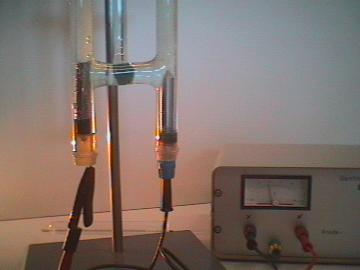

Stanley Meyer, an Ohio inventor, spent the 1980s and 1990s promoting a device he called the Water Fuel Cell, built into a dune buggy he drove on demonstration runs. He claimed the cell split ordinary water into hydrogen and oxygen gas using an electrical process he called resonant electrolysis, matching a mechanical resonance in the water molecule to an electrical resonance in the driving circuit rather than forcing the split with raw current [2]. The gas was then burned as fuel. Meyer's central claim was that this process used less energy to split the water than was released when the resulting hydrogen and oxygen recombined, a net energy gain from an ordinary, everyday substance.
That claim sold real money. Meyer's company, Water Fuel Cell Inc., raised funds by selling regional dealership rights to the technology rather than selling finished cars or licensing an already-proven product. Two investors who paid for those rights and never received working technology sued in Fayette County, Ohio.
On September 3, 1996, Judge William Corzine III of the Fayette County Court of Common Pleas ruled against Meyer, finding his company had committed "gross and egregious fraud" and ordering repayment to the investors [1]. The ruling followed an independent technical examination compelled by the litigation: under expert review, the cell showed no unusual behavior. It worked exactly like conventional electrolysis, which consumes more energy than the resulting gas releases when burned, the same net loss every electrolysis cell has shown since the process was first studied in the early 1800s.
Physicist and science writer Philip Ball, covering the case for Nature, described Meyer's net-energy-gain claim as a straightforward violation of the conservation of energy, the same law that rules out every perpetual motion machine, regardless of the specific mechanism proposed [2]. No replication of Meyer's claimed output has ever been independently verified, and no physical principle has been identified that would let his circuit do what he said it did.
- [01] Fayette County, Ohio Court of Common Pleas. Judge William Corzine III, ruling against Water Fuel Cell Inc., September 3, 1996.
- [02] Ball, P. (2007). Burning water and other myths. Nature News.
Two explanations circulate outside the court record, both built on real, documented details rather than pure invention.
Silenced by poisoning to suppress the technology
Meyer died on March 20, 1998, while meeting two Belgian investors at a Cracker Barrel restaurant in Grove City, Ohio. His brother Stephen, seated at the table, has said Meyer ran outside, told him "they poisoned me," and collapsed [2]. A three-month police investigation followed, and the Franklin County coroner's office ran a toxicology screen that found no trace of poison, attributing death to a cerebral aneurysm brought on by chronic high blood pressure [1]. Meyer had a documented history of high blood pressure before that day. Against the claim: no evidence of foul play surfaced in a genuine investigation, and a brain aneurysm without warning is medically consistent with his known condition, poison or not.
The fraud ruling addressed the business, not the underlying physics
A narrower argument accepts the 1996 verdict at face value while pointing out what it actually adjudicated: a civil fraud claim by two dealership investors who paid for rights to a commercial product Meyer never delivered, not a fully independent, adversarial scientific test of the resonance claim published in a peer-reviewed venue [3]. Meyer held patents on his cell's construction, granted by an examiner evaluating novelty of design rather than verifying real-world energy output, which patent law never requires. That leaves a real gap between "a court found the business fraudulent" and "an independent lab replicated the claim and it failed," a gap this argument treats as still open. It closes on physics rather than paperwork: even a design that has never been formally retested cannot output more energy than it consumes without violating conservation of energy, the same law every perpetual motion claim runs into regardless of how its specific mechanism is described.
- [01] Franklin County, Ohio coroner's office, cause of death report, March 1998.
- [02] Contemporary news accounts of the March 20, 1998 incident at a Cracker Barrel restaurant in Grove City, Ohio, citing Stephen Meyer's account of his brother's final words.
- [03] Fayette County, Ohio Court of Common Pleas ruling, September 3, 1996, and the U.S. Patent and Trademark Office's independent grant of patents on Meyer's resonant cell apparatus.