THE TUSKEGEE SYPHILIS STUDY
For forty years a US Public Health Service study watched hundreds of Black men with syphilis go untreated to record the disease. The men were never told, and a treatment existed for most of it.
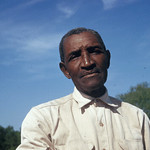

The Tuskegee Study of Untreated Syphilis in the Negro Male ran from 1932 to 1972, conducted by the United States Public Health Service in and around Tuskegee, Alabama. It enrolled about 600 Black men, roughly 400 who had latent syphilis and about 200 without it as controls. The stated purpose was to observe the natural course of untreated syphilis, and the men were told only that they were being treated for "bad blood," a local term covering several ailments [1].
The men were not told they had syphilis and were not treated for it. In exchange for participation they received free meals, free medical exams for other conditions, and burial insurance. Investigators actively kept them from care: the study worked to prevent the men from being treated elsewhere, and when penicillin became the standard, effective cure for syphilis in the late 1940s, it was withheld from them. The study continued for another two decades after a one-shot cure existed [2].
The study did not end from within. In 1972 a Public Health Service employee, Peter Buxtun, brought the details to the press, and the Associated Press published them, drawing national outrage. A federal advisory panel reviewed the study and found it ethically unjustified, and it was shut down that year [4]. By then dozens of men had died of syphilis or its complications, and wives and children had been infected.
The consequences reshaped American research. A 1974 settlement compensated survivors and families, the case drove the National Research Act of 1974 and the system of institutional review boards and informed consent that governs human research today, and in 1997 President Bill Clinton issued a formal federal apology to the survivors [3]. The documented record is not in dispute: a real government study, the deliberate withholding of a known cure, and men who were deceived for forty years.
- [01] Jones, J.H. (1993). Bad Blood: The Tuskegee Syphilis Experiment, revised edition. Free Press.
- [02] Centers for Disease Control and Prevention. The Tuskegee Timeline. Official history of the study.
- [03] Reverby, S.M. (2009). Examining Tuskegee: The Infamous Syphilis Study and Its Legacy. University of North Carolina Press.
- [04] Final Report of the Tuskegee Syphilis Study Ad Hoc Advisory Panel (1973). US Department of Health, Education, and Welfare.
The study's real record is grim enough that the disputes are mostly about how far it went. Each claim has a traceable origin and a documented response. They are laid out in full so you can weigh them yourself.
The men were deliberately infected
A widespread belief holds that the Public Health Service infected the Tuskegee men with syphilis. The response: the documented record shows the men already had syphilis when enrolled and that the wrong done to them was the deliberate withholding of diagnosis and treatment, not infection [1]. The confusion has a real root, because in a separate program in Guatemala from 1946 to 1948, US researchers did deliberately infect subjects with syphilis and gonorrhea, which a 2010 review confirmed and which drew a federal apology [2]. Two real programs, one that withheld treatment and one that infected, have merged in memory into a single story.
A visible piece of a larger hidden program
Another reading treats Tuskegee as the exposed edge of a wider secret effort against Black Americans. Against the record, the study is unusually well documented precisely because it was not deeply hidden, it was published in medical journals throughout its run and ended when a single insider went to the press [1]. The broader history of unethical experimentation on Black patients is real and documented, but it is a pattern of separate abuses rather than one coordinated program, and treating it as a single plan can obscure the specific institutions responsible for each [3].
Negligence and racism rather than a plan
A third view holds that the study was less a designed atrocity than the product of racism, institutional inertia, and doctors who told themselves the men would not have sought treatment anyway. This fits how the study drifted on for forty years without anyone stopping it, and it is close to what the 1973 federal panel found. It is not a defense, since the panel still judged the study ethically unjustified, and the outcome, men left to die of a curable disease, was the same whether it began as a plan or hardened into one.
- [01] Reverby, S.M. (2009). Examining Tuskegee. On the difference between infection and withheld treatment, and the myths.
- [02] Reverby, S.M. (2011). 'Normal Exposure and Inoculation Syphilis,' Journal of Policy History. On the separate Guatemala experiments.
- [03] Washington, H.A. (2006). Medical Apartheid. Doubleday. On the pattern of experimentation and the distrust it created.