THE VELA INCIDENT
On September 22, 1979, a U.S. satellite built to detect nuclear tests recorded the exact double flash of one over the South Atlantic. A panel convened by Jimmy Carter concluded it probably was not. The U.S. government has never confirmed it either way.
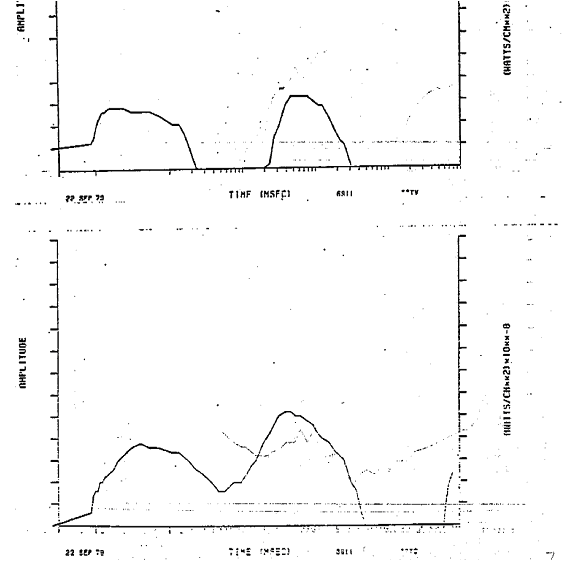

At 00:53 GMT on September 22, 1979, the U.S. satellite Vela 6911 recorded a double flash of light over the South Atlantic near the Prince Edward Islands, a bright spike, a dip, and a second longer flash. That two-peak signature is the specific optical fingerprint the Vela satellites were built to detect. Since 1963, the constellation had confirmed dozens of atmospheric nuclear tests worldwide and had never once produced a false double flash [1].
The government response moved fast and found little. Air Force WC-135 aircraft flew radiation-sampling missions over the South Atlantic and South Indian Ocean in the following days and returned no debris consistent with a nuclear cloud. No ground seismic station and no other satellite independently corroborated an explosion at that time and place [2]. The absence of a second confirming source, for a weapon type expected to be small, became the central problem the government's own review had to explain.
President Carter convened an outside panel of scientists, chaired by Jack Ruina, an MIT professor and former director of the Advanced Research Projects Agency. Its report, issued in May 1980, concluded that the evidence was not sufficient to confirm a nuclear detonation and that the signal was more likely a "zoo event," a known category of sensor glitch, possibly caused by a small meteoroid striking dust off the satellite's surface directly in front of the optical sensor [1].
The panel's finding remains the official U.S. position. No administration since 1980 has confirmed the Vela event as a nuclear test, and none has offered a different explanation for the signal. What the declassified record establishes plainly: a purpose-built detection satellite with a clean record produced its exact target signature once, and the panel asked to explain it away could not rule out that the signature was genuine.
- [01] Ad Hoc Panel (chaired by Jack Ruina). Report of the Ad Hoc Panel on the September 22, 1979 Vela Event. White House Office of Science and Technology Policy, May 1980.
- [02] Richelson, J.T., ed. (2006). The Vela Incident. National Security Archive Electronic Briefing Book No. 190.
The Ruina panel's own uncertainty is exactly what kept this open. Later evidence, most of it published years or decades after 1980, has pushed the argument in more than one direction. Each version below has a documented basis and a documented limit.
A joint Israeli and South African nuclear test
The strongest reading rests on three independent lines of evidence. Naval Research Laboratory hydroacoustic analysts, working from a listening station at Ascension Island, found an ocean signal at the right time and bearing for a surface or near-surface blast in the search zone [1]. In 2018, Swedish radionuclide scientist Lars-Erik De Geer traced a spike of iodine-131 in Australian sheep thyroids, recorded by CSIRO weeks after the flash, to fallout blown north from a low-yield detonation in that same ocean, ruling out the timing of Chernobyl and known medical-isotope sources [2]. South African archives declassified after apartheid document nuclear cooperation with Israel going back to at least 1975, including an offer of warhead assistance [3]. Set against this: no debris, telemetry, or defector has ever named a specific vessel, aircraft, or crew, so the case is convergent circumstantial evidence rather than a signed confession from either government.
Detected and privately confirmed, kept ambiguous for political reasons
A narrower claim holds that intelligence analysts at the working level leaned toward a nuclear explanation with more confidence than the Ruina panel's public language conveyed, and that a formal confirmation was avoided because U.S. law required sanctions against any government caught testing or transferring nuclear weapons, sanctions Washington did not want to impose on Pretoria or Tel Aviv [1]. This tracks the documented internal split, several analysts on record disputing the meteoroid explanation on technical grounds at the time. It does not establish that the ambiguous public verdict was written to order rather than reflecting a real, unresolved scientific disagreement that existed on its own.
A real detonation by an unattributed party
A middle position accepts that the physical evidence favors an actual nuclear event while treating the identity of the operator as still unproven. Under this reading, the hydroacoustic and radionuclide data are strong enough to move the event from "ambiguous" to "probable," but naming Israel and South Africa specifically depends on diplomatic history and motive rather than a piece of hardware or a document written at the test site itself. Four decades on, no additional country or actor has surfaced as an alternative candidate, which is the strongest indirect support the two-nation theory has, short of an admission neither government has ever given.
- [01] Richelson, J.T. (2006). Spying on the Bomb. W.W. Norton.
- [02] De Geer, L-E. (2018). Radionuclide Evidence for Low-Yield Nuclear Detonation off South Africa in September 1979. Science & Global Security, 26(3).
- [03] Polakow-Suransky, S. (2010). The Unspoken Alliance. Pantheon.