THE SOMERTON MAN
In 1948 a well-dressed man was found dead on an Adelaide beach with no ID, the labels cut from his clothes, and a scrap reading 'Tamam Shud' in a hidden pocket. In 2022, DNA finally gave him a name.
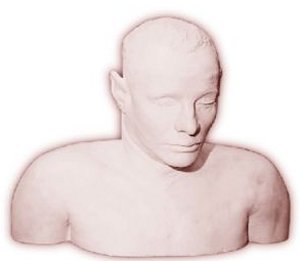

On the morning of December 1, 1948, the body of a man was found propped against a seawall on Somerton Beach near Adelaide, Australia. He was middle-aged, fit, and neatly dressed, but he carried no wallet, no identification, and the labels had been cut from his clothing. A cigarette rested on his collar. Nothing on him gave a name [1].
The case deepened at the autopsy and after. The pathologist suspected poisoning from the state of the organs but could identify no poison, which was possible with drugs that break down quickly. Months later, a tiny rolled scrap of paper was found sewn into a hidden fob pocket, printed with the Persian words Tamam Shud, meaning "ended" or "finished," torn from a copy of the Rubaiyat of Omar Khayyam. Police traced the specific book, and inside its cover were faint pencil markings that looked like a code and a local phone number [1].
The details fed decades of speculation, but the central mystery was simply who he was. In 2021 the South Australian authorities exhumed the body for DNA, and in 2022 a team led by Derek Abbott at the University of Adelaide, working with the genetic genealogist Colleen Fitzpatrick, announced an identification. Using DNA recovered from hair set in the 1949 death mask and matched through family trees, they named him as Carl "Charles" Webb, an electrical engineer and instrument maker born in Melbourne in 1905 [2].
The identification reframes the case. Webb was estranged from his family, had a documented interest in poetry, and appears to have had personal troubles, which points many researchers toward a natural death or suicide rather than intrigue. South Australia Police have treated the Abbott identification as compelling while noting formal coronial confirmation is a separate step [3]. The core forty-year question, the man's name, now has a well-supported answer; how and why he died remains open but no longer requires a stranger from nowhere.
- [01] Feltus, G.M. (2010). The Unknown Man. Self-published. By the South Australia Police detective who worked the case.
- [02] Abbott, D. (2022). University of Adelaide, identification of the Somerton Man as Carl Webb through DNA and genealogy.
- [03] South Australia Coroner's Court. Inquest into the death of the Somerton Man (1949, reopened 2011).

Even with a name, the case keeps several older theories alive, because the manner of death and the code are not settled. Each has a traceable origin and a documented response. They are laid out in full so you can weigh them yourself.
A Cold War spy, poisoned
The most popular theory casts the man as an intelligence agent killed with an undetectable poison, set against the postwar tension near Australia's Woomera rocket range [1]. The response: the 2022 identification points to an ordinary Melbourne engineer with no documented intelligence links, the removed labels and poison suspicion have innocent explanations, and no record connecting Webb to espionage has surfaced. The spy story grew from a real forensic puzzle, an unidentified poison and a mysterious phrase, that a mundane life can also explain.
The code is a genuine cipher
A second thread treats the pencil letters in the Rubaiyat as a real encrypted message still waiting to be cracked, and codebreakers have studied it for decades [2]. Weighed carefully, most cryptographers now think the short, letter-heavy string is too brief to solve and may not be a cipher at all, but rather the initial letters of a remembered verse or a private mnemonic. It remains formally unsolved, which is not the same as being a hidden message, and the identification did not turn on it.
A private tragedy tied to a local family
A quieter theory focuses on the phone number in the book, which led to a local nurse, Jessica Thomson, and to long speculation that she knew the man and that a child of hers was his son [3]. The DNA work has been used to test these family links, with debated results, and this line stays closest to the new evidence because it is about relationships rather than spies. Its limit is that even a confirmed personal connection would explain who he came to see, not the exact cause of a death the pathology never pinned down.
- [01] Dash, M. (2011). The Somerton Man: An Unsolved History. On the espionage theories.
- [02] Dunin, E. & Schmeh, K. (2020). Codebreaking: A Practical Guide. On the status of the Tamam Shud code.
- [03] Feltus, G.M. (2010). The Unknown Man. On the phone number and the Jessica Thomson connection.
INFORMAL READER POLL, NOT DATA. WHICH EXPLANATION DO YOU FIND MOST CREDIBLE?