PROJECT STARGATE
For about two decades the U.S. government funded research into psychic spying, called remote viewing. The files are declassified. Whether it ever worked is argued.
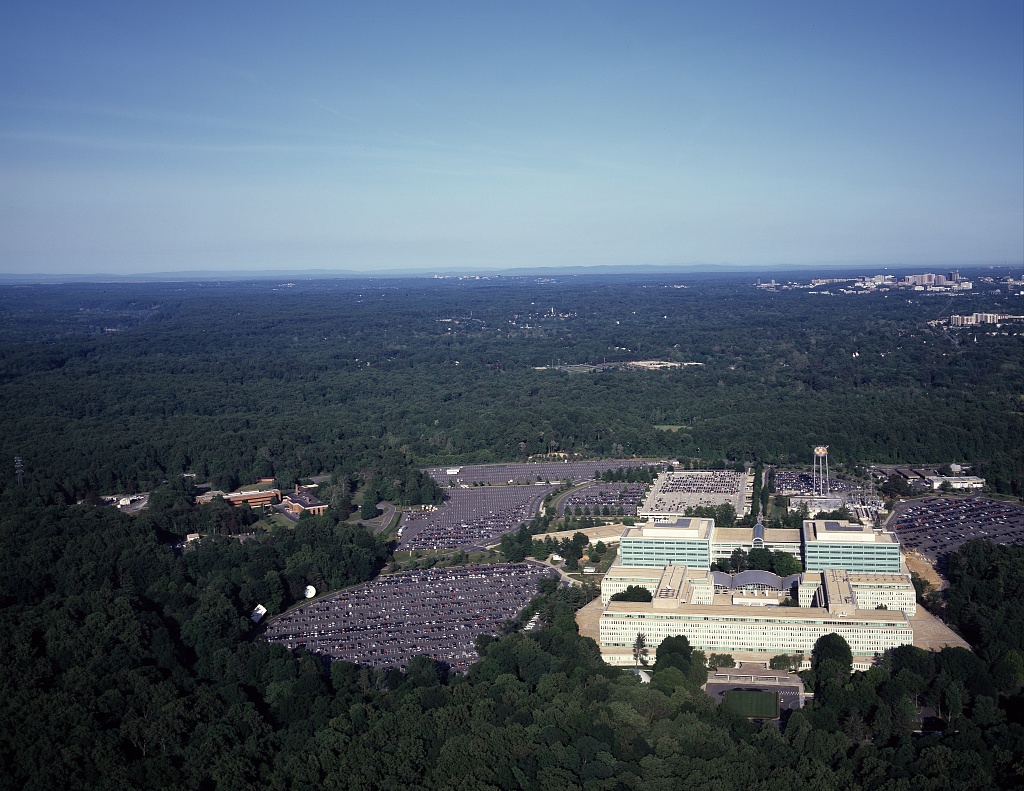

Project Stargate is the name now used for a series of U.S. government programs that studied remote viewing, the claimed ability to describe distant places and events by mind alone. The work ran from the early 1970s to 1995 under several code names, including SCANATE, Grill Flame, Center Lane, and Sun Streak, funded over time by the CIA, the Defense Intelligence Agency, and Army intelligence [4].
Much of the early research took place at Stanford Research Institute, where the physicists Russell Targ and Harold Puthoff tested subjects such as Ingo Swann, Pat Price, and the stage performer Uri Geller. The military side trained a small unit of viewers, the best known being Joseph McMoneagle, designated Remote Viewer No. 1. The total spend across two decades was roughly 20 million dollars [1].
In 1995 the CIA commissioned the American Institutes for Research to evaluate whether remote viewing had any intelligence value. The review paired two assessments. Jessica Utts, a statistician, concluded that a small statistical effect appeared in the laboratory data and merited study [2]. Ray Hyman, a psychologist, judged the same data the product of methodological flaws and unconscious cueing, not proof of a real ability [3].
The CIA's conclusion was that remote viewing had never produced information useful enough to guide an intelligence operation, and the program was closed in 1995 [1]. The agency later released about 12,000 pages from the files [4]. What the record settles is that the research happened and was funded at that level. What it does not settle is how to read the laboratory results, which the two AIR reviewers read in opposite directions.
- [01] American Institutes for Research (1995). An Evaluation of Remote Viewing: Research and Applications. The CIA-commissioned review that ended the program.
- [02] Utts, J. (1996). An Assessment of the Evidence for Psychic Functioning. Journal of Scientific Exploration 10(1). The favorable statistical review in the AIR report.
- [03] Hyman, R. (1996). Evaluation of the Program on Anomalous Mental Phenomena. Journal of Scientific Exploration 10(1). The critical review in the AIR report.
- [04] CIA declassified Stargate collection (released 2017). Roughly 12,000 documents on remote-viewing research.

The program's defenders read the same files very differently from the CIA. Each claim has a traceable origin and a documented response. They are laid out in full so you can weigh them yourself.
Remote viewing produced real intelligence
Targ, Puthoff, and McMoneagle cite specific hits: Pat Price's description of a Soviet research site, and McMoneagle's account of describing a new class of submarine under construction [1][2]. The response: the 1995 AIR review found no case where remote viewing had supplied information that an analyst could act on, the celebrated hits came with many misses, and critics traced apparent accuracy to vague language and to cues left in the transcripts [3].
Geller and the psychics were genuinely paranormal
A stronger claim holds that subjects like Uri Geller demonstrated real paranormal powers that the government tried to weaponize. Against this stands the testing record. Geller's SRI results were disputed at the time, stage magicians reproduced his feats by ordinary means, and no controlled trial established an effect that held up under tight conditions [4].
The program never really ended
Some hold that the 1995 closure was a cover, and that remote viewing continued under deeper classification. No declassified document supports a successor program, the CIA released the bulk of the files, and the claim survives mainly because secrecy can never fully prove a negative.
- [01] Targ, R. & Puthoff, H. (1977). Mind-Reach. Delacorte. The SRI researchers' account of their results.
- [02] McMoneagle, J. (2002). The Stargate Chronicles. Hampton Roads. The insider claim of operational hits.
- [03] Marks, D. & Kammann, R. (1980). The Psychology of the Psychic. Prometheus. The cueing critique of the SRI transcripts.
- [04] Randi, J. (1982). Flim-Flam! On stage-magic explanations for Geller's demonstrations.