POLYWATER
For a few years around 1970, serious chemists believed water could be coaxed into a syrupy polymer, and some feared a drop of it could convert the world's oceans. It was sweat and grease from the glassware.
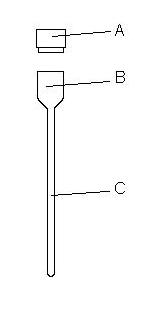

In the early 1960s the Soviet physicist Boris Deryagin took up an odd result from a colleague named Nikolai Fedyakin. Water condensed inside very narrow quartz capillary tubes appeared to behave wrongly. It was denser than ordinary water, about 1.4 times, it did not freeze until roughly 40 degrees below zero, it did not boil until far above 100, and it had the consistency of a syrup or a light grease.
Deryagin proposed an explanation with enormous implications: the water molecules had linked into a polymer, a new and more stable form of water. He called it anomalous water. When the work reached the West around 1966, the name polywater stuck, and for about five years it was a serious field. Hundreds of papers were published. Laboratories in Britain and the United States reproduced the substance and confirmed its properties. The United States military took an interest, on the reasoning that anything the Soviets were pursuing this hard might matter [2].
Then it got frightening. In 1969 the physicist Frank Donahoe published a letter in Nature arguing that if polywater was genuinely the more stable form of water, then any contact between it and ordinary water should convert the ordinary water too, and the process would not stop. He called it the most dangerous material on earth and suggested it should be treated as a threat to all life on the planet [4]. That is the tone the field reached at its peak: not a fringe crank, but a working physicist in Nature, wondering aloud whether a laboratory curiosity might convert the oceans.
It was dirt. Denis Rousseau and Sergio Porto at Bell Labs ran spectroscopic analysis on samples of polywater in 1970 and found it was not a polymer of anything. It was ordinary water contaminated with dissolved substances leached from the quartz and, crucially, with organic material: sodium, potassium, chlorine, sulfates, silicon. Rousseau made the point brutally and memorably by producing a substance with the same anomalous properties from his own sweat after a handball game [3]. The narrow capillaries that made the effect possible were also what made contamination inevitable, because the surface-to-volume ratio was so extreme that whatever coated the glass dominated the sample.
Deryagin retracted. In 1973 he published a letter in Nature stating plainly that the properties he had reported were attributable to impurities and that polywater did not exist [1]. He was a respected scientist, he had been wrong in public for a decade, and he said so in print.
The record is closed. Polywater was contamination, and the field's own tools eventually showed it. It is now taught as a case study in how a real, replicable, measurable effect can be entirely an artifact of the method used to produce it.
- [01] Deryagin, B.V. & Churayev, N.V. (1973). Nature of anomalous water. Nature 244, 430-431. The retraction.
- [02] Franks, F. (1981). Polywater. MIT Press.
- [03] Rousseau, D.L. & Porto, S.P.S. (1970). Polywater: polymer or artifact? Science 167, 1715-1719.
- [04] Donahoe, F.J. (1969). Anomalous water. Nature 224, 198. The letter warning it could be the most dangerous material on earth.
The discoverer retracted it himself, which is as clean an ending as science offers. The claims that survive are about what the episode meant. Each has a traceable origin and a documented response. They are laid out in full so you can weigh them yourself.
A real effect was abandoned too quickly
A small argument holds that water genuinely does behave strangely in extreme confinement, that modern research on nanoconfined water finds real anomalies in viscosity and freezing point, and that the field threw out a true observation along with the false explanation [1]. There is a grain of truth here worth keeping: confined water is a live research area today and it does not behave like bulk water. What that does not rescue is polywater itself. The specific claim was a polymerized form of water with a distinct chemical structure, and the spectroscopy found no such structure, only impurities. Being partly right about the neighborhood is not the same as being right about the house.
It was suppressed because of the panic
Donahoe's letter proposing that polywater might convert the world's oceans is real, and it is often cited as evidence that the field was killed by fear rather than by data [2]. The record does not support it. The panic and the debunking ran on separate tracks: Rousseau and Porto were doing spectroscopy, not risk assessment, and their finding was that the samples contained sodium, chloride, and organic residue. Nothing about a scare story changes what a spectrometer reads. The episode ended because the measurement went against it, and the strongest evidence for that is that the man with the most to lose is the one who published the retraction.
The Cold War made everyone credulous
This is less a claim than an explanation, and it is largely accepted. Felix Franks documented how the possibility that the Soviets had found something drove Western funding and softened Western skepticism, and how the same dynamic ran in reverse in Moscow [3]. It is the most useful thing in the file. Polywater did not require a hoax, a crank, or a fraud. It required competent scientists, a real and reproducible measurement, an explanation that was too interesting to give up, and a political climate that rewarded believing it. That combination is not rare, which is the uncomfortable part.
- [01] Deryagin, B.V. Public statements through the late 1960s defending the polymer interpretation before his 1973 retraction.
- [02] Donahoe, F.J. (1969). Anomalous water. Nature 224, 198.
- [03] Franks, F. (1981). Polywater. MIT Press. On the Cold War pressure and the funding that followed the claim.