THE PHANTOM TIME HYPOTHESIS
In 1991 a German author proposed that 297 years of European history, AD 614 to 911, never happened, and that Charlemagne was a medieval invention. The calendar arithmetic he built it on has a documented answer, and so do the Chinese astronomers who kept watching the sky through all 297 of those years.

Heribert Illig, a German publisher and writer born in Bavaria in 1947, first put the claim in print in 1991: the years AD 614 to 911 did not happen. That is 297 years, the whole Carolingian era included. Illig expanded the argument in Hat Karl der Große je gelebt? ("Did Charlemagne Ever Live?") in 1994, and in Das erfundene Mittelalter ("The Invented Middle Ages") from Econ Verlag in 1996 [1]. Hans-Ulrich Niemitz, who taught the history of technology at a Leipzig university of applied sciences, gave the idea its English-language statement in a 1995 paper concluding that "between antiquity and the Renaissance historians count approximately 300 years too many" [2].
What Illig offered as evidence
Three arguments carry the weight. The first is a calendar discrepancy. The Julian calendar ran slightly long, gaining about one day every 128 years, and when Pope Gregory XIII corrected it in 1582 the reform removed 10 days [3]. Counted from Julius Caesar's introduction of the Julian calendar in 45 BC, Illig argued, the drift should have reached 13 days. Three missing days, three missing centuries. The second is archaeological thinness: Illig argued that Western Europe in those centuries leaves too little in the ground for the population and building the written record describes. The third is architectural. He read the Palatine Chapel at Aachen, attributed to Charlemagne around 800, as using techniques that belong to the Romanesque period two centuries later [1].
The calendar answer
Inter gravissimas set out to return the spring equinox to March 21, the date it fell at the Council of Nicaea in AD 325, because that council fixed the rules for calculating Easter [3]. From 325 to 1582 is 1,257 years, which at one day per 128 years comes to just under 10 days. The reform removed 10. The three days Illig expected are the drift between 45 BC and AD 325, and nobody in 1582 was trying to recover them.
Records kept outside Europe
The rest of the world kept counting through the gap. China's Tang dynasty ruled from 618 to 907, a span that fits almost exactly inside the years Illig removes, and its histories run continuously through it. The Islamic calendar begins with the Hijra in 622, also inside the gap, and the Umayyad and Abbasid records count forward from it without a break.
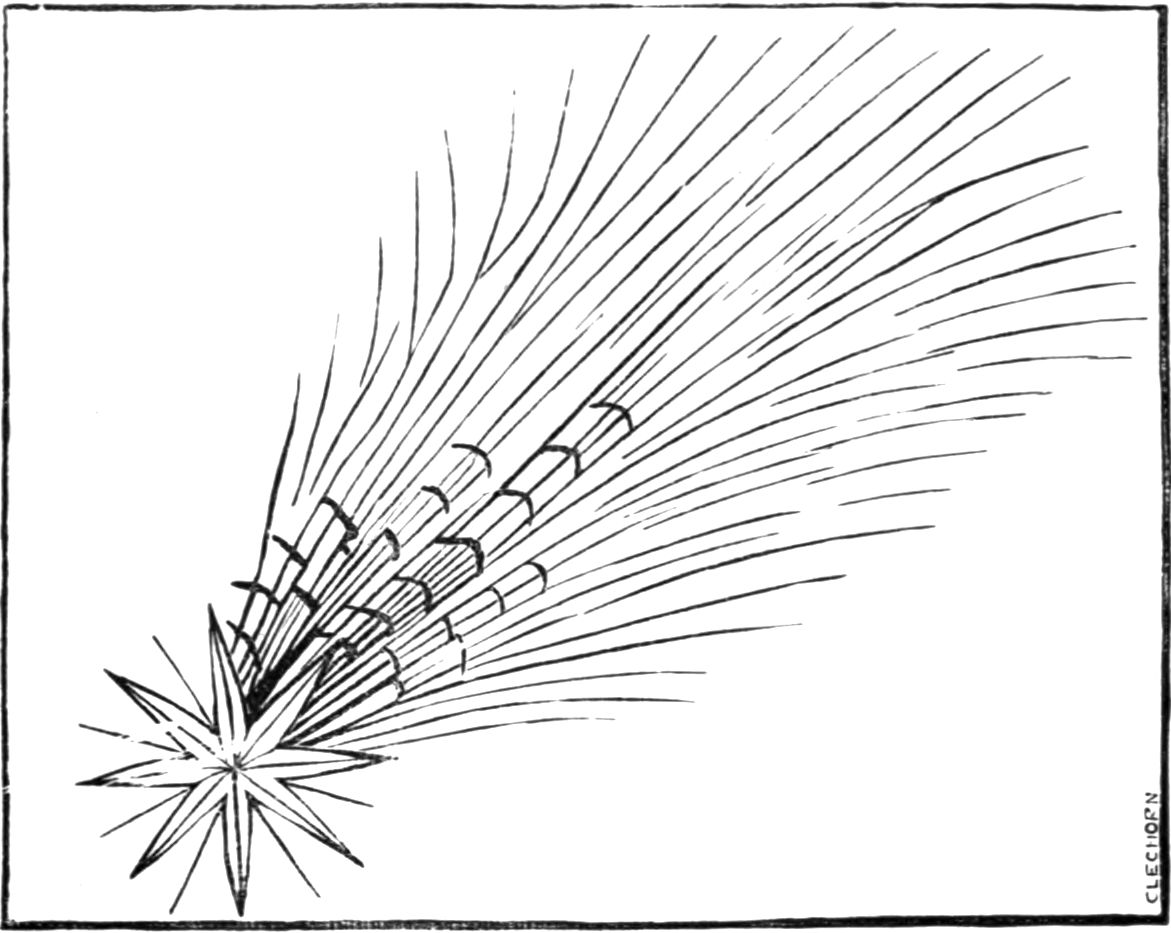
The sky offers a check that no court could forge. Chinese astronomers recorded Halley's Comet in 607, 684, 760, 837 and 912, at the roughly 76-year intervals the comet's orbit requires [4]. If 297 years were deleted from the count, those observations would sit nowhere near the dates on which orbital calculation puts the comet. The same test runs on eclipses. Pliny the Elder recorded a solar eclipse in AD 59, seen in Campania and in Armenia, and retrocalculation lands it on the conventional date [5]. Moving the calendar by three centuries breaks every one of these matches at once.
Tree rings close the question from the ground. European oak chronologies, built by overlapping the ring patterns of living trees, old timber and buried wood, run continuously across the first millennium with no 297-year hole. Radiocarbon dates line up with them [6].
No academic historian or chronologist has adopted the hypothesis. A fabricated century would have to fool the Tang court historians, the Islamic calendar, the comet, the eclipses and the oaks at the same time.
- [01] Illig, H. (1996). Das erfundene Mittelalter. Econ Verlag. Preceded by Illig, H. (1994). Hat Karl der Große je gelebt? Mantis Verlag.
- [02] Niemitz, H-U. (1995). Did the Early Middle Ages Really Exist? Paper, Leipzig.
- [03] Pope Gregory XIII. Inter gravissimas, papal bull, February 24, 1582.
- [04] Kronk, G.W. Cometography, Vol. 1. Cambridge University Press, 1999. Catalog of historical apparitions of 1P/Halley.
- [05] Pliny the Elder. Naturalis Historia, Book II, on the solar eclipse of AD 59 observed in Campania and Armenia.
- [06] Phantom time conspiracy theory, Wikipedia, cross-referenced against Illig's German-language publication record.
The calendar argument is where most readers meet the hypothesis, and it is the part the mainstream record answers most directly. The claims below go further, into who would have invented three centuries and why.
Otto III and Sylvester II invented the Carolingians
Illig's motive for the fabrication is political. Holy Roman Emperor Otto III and Pope Sylvester II, he argued, wanted Otto's reign to fall on the symbolic year 1000, and moved the count forward to put it there. The empty centuries then needed filling, so the Carolingian dynasty was written into them, with Charlemagne as its founding figure, assembled partly from older Frankish material and partly from invention [1]. The forged documents medievalists already know about give the claim its foothold: monastic scriptoria did produce false charters, and the Donation of Constantine is the famous proof that a forgery could govern European politics for centuries.
Against it stands the scale. A forged charter is one document serving one claim. Inventing three centuries means forging the chronicles, the coinage, the church councils, the papal letters and the correspondence with Byzantium, and doing it consistently enough that the Tang annals, the Islamic calendar and the orbit of Halley's Comet happen to agree with the result. No document from Otto's court describing the project has been produced.
The archaeological gap
Niemitz pressed the physical argument harder than the calendar one [2]. Early medieval sites in Western Europe, he wrote, are thin in a way that is easier to explain if the centuries were never lived. Archaeologists accept that the period leaves less in the ground than the Roman centuries before it: smaller towns, more timber and less stone, fewer coins. What they dispute is the conclusion. A poorer, less urban society leaves a fainter record, and the sites that do exist carry tree-ring and radiocarbon dates inside the gap. Sutton Hoo, the English ship burial dated by its Merovingian gold coins to around 625, is one of them.
A larger rewrite: Fomenko's New Chronology
Russian mathematician Anatoly Fomenko published a far wider claim through the 1980s and 1990s. His New Chronology argues that most of recorded ancient history is a duplicated and stretched copy of medieval events, and that written history before about AD 1000 is largely unreliable [3]. Illig's 297 years would be a small piece of Fomenko's correction. Fomenko's method is statistical: he matches patterns between reign lists and treats the match as evidence that one list was copied from the other. Historians who answered Fomenko pointed to the same independent clocks that answer Illig, and the New Chronology has no more academic standing than the phantom centuries.
- [01] Illig, H. (1996). Das erfundene Mittelalter. Econ Verlag.
- [02] Niemitz, H-U. (1995). Did the Early Middle Ages Really Exist? Paper, Leipzig.
- [03] Fomenko, A.T. History, Fiction or Science? (Chronology series, English edition of the New Chronology volumes). Delamere, 2003 onward.