PAUL IS DEAD
In 1969 a rumor spread that Paul McCartney had died in 1966 and been replaced by a lookalike, with the clues hidden in the records. He was alive then, he is alive now, and the rumor is still going.
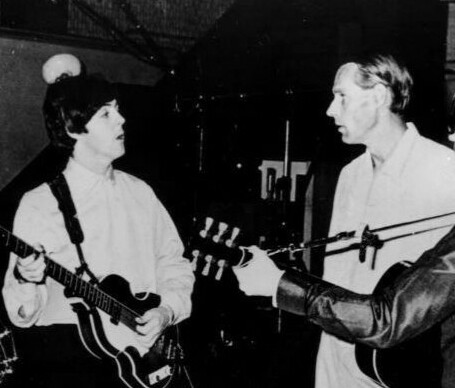

Paul McCartney was born in 1942, and in July 2026 he is alive, has been continuously photographed, recorded, interviewed, married, sued, knighted, and toured for more than sixty years. That is the record. What follows is the story of a rumor that has outlived every person who started it.
The claim, in its standard form, is that McCartney died in a car crash in November 1966, that the surviving Beatles concealed it to protect the band, that they replaced him with a lookalike, and that they then spent three years burying clues about it in their own albums out of guilt.
It surfaced in print in September 1969, when a student named Tim Harper wrote about it in the Drake University paper, and it went national when Fred LaBour published a piece in the Michigan Daily reviewing Abbey Road and cataloguing the clues. LaBour later said he had invented most of them as satire. A Detroit disc jockey named Russ Gibb took a caller's tip on air in October 1969 and the story detonated across American radio inside a week [1][3].
The clues are the interesting part, because they are real things that people really can see and hear. On the Abbey Road cover, the four Beatles cross the street and McCartney is barefoot and out of step, which was read as a corpse dressed for burial. A Volkswagen parked in the background carries the plate LMW 28IF, read as "Linda McCartney Weeps" and McCartney's age if he had lived. On Sergeant Pepper, a hand appears above his head. Play the end of "Strawberry Fields Forever" and John Lennon's murmur can be heard as "I buried Paul." Play "Revolution 9" backwards and you get "turn me on, dead man."
Every one of these has a mundane explanation, and most were confirmed by the people involved. McCartney took his shoes off because it was a hot August day. The car belonged to someone who lived on the street. Lennon said he was saying "cranberry sauce." Backward audio is the clearest case of all: it is a well-documented perceptual effect where the brain, once told what phrase to expect, reliably hears that phrase in noise. Tell someone the words first and they hear them. Do not tell them, and they hear nothing [4].
McCartney ended it the simplest way available. In November 1969 he let Life magazine come to his farm in Scotland, photograph him with his family, and print an interview in which he observed that if he were dead he would probably be the last to know [2].
The record is closed. He did not die in 1966, and the clues are a case study in how thoroughly people can find a pattern once they are handed one to look for.
- [01] Reeve, A.J. (1994). Turn Me On, Dead Man: The Beatles and the "Paul Is Dead" Hoax. AuthorHouse.
- [02] McCartney, P. (1969). Interview with Life magazine, November 7, 1969, given to end the rumor.
- [03] Gibb, R. (1969). Is Beatle Paul McCartney Dead? Northern Star, Northern Illinois University, September 17, 1969.
- [04] Brotherton, R. (2015). Suspicious Minds: Why We Believe Conspiracy Theories. Bloomsbury.
The man is alive, so what is left is the more interesting question of why the story will not die. Each claim has a traceable origin and a documented response. They are laid out in full so you can weigh them yourself.
He died in 1966 and was replaced
The claim survives by absorbing its own refutation: any photograph of a living McCartney becomes a photograph of the replacement. Believers point to changes in his face and his height between 1965 and 1968, and some have run forensic comparisons of album photographs claiming to show two different skulls. What the argument requires is the part nobody defends: that Lennon, Harrison, Starr, George Martin, Brian Epstein's entire office, the man's own family, and every session musician and roadie in London kept the secret for sixty years, while simultaneously hiding clues about it in their records. A theory that cannot be disproven by the continued existence of its subject is not a theory about the world. It is a theory about photographs.
The Beatles planted the clues on purpose
This is the strongest surviving version, and it is not absurd. The band were pranksters, they knew the rumor was running by late 1969, and Abbey Road was photographed in August of that year, after the story had begun circulating in the American underground press. So the question of whether some of the later imagery was a deliberate wink is genuinely open. Against a fuller version stands the timeline. The Sergeant Pepper and Magical Mystery Tour material predates the rumor entirely, and Lennon, who enjoyed nothing more than admitting to a wind-up, denied planting anything and spent years mocking the whole business. What most likely happened is that a rumor arrived, the band found it funny, and a few late details got read backward into a body of work that was already dense with in-jokes.
The clues are really there
They are, and that is the point worth keeping. The barefoot crossing, the license plate, the murmur at the end of the track, the backward audio: these are not fabrications, they are real features of real records that anyone can go and check. What the file demonstrates is that a sufficiently large body of work contains enough coincidence to support any narrative supplied in advance. The backward-audio research makes this concrete: people reliably hear the phrase once they are told what to listen for, and hear nothing when they are not [3]. The clues did not create the rumor. The rumor created the clues.
- [01] LaBour, F. (1969). McCartney Dead; New Evidence Brought to Light. The Michigan Daily, October 14, 1969. Its author later stated he invented most of the clues.
- [02] Gibb, R. (1969). WKNR-FM Detroit broadcast, October 12, 1969, which carried the rumor to a national audience.
- [03] Vokey, J.R. & Read, J.D. (1985). Subliminal messages: Between the devil and the media. American Psychologist 40. On backward speech and expectation.