OPERATION GLADIO
NATO built secret armies across Western Europe to fight a Soviet occupation that never came. An Italian prime minister admitted it in 1990. What those networks did while they waited is still being argued in court.
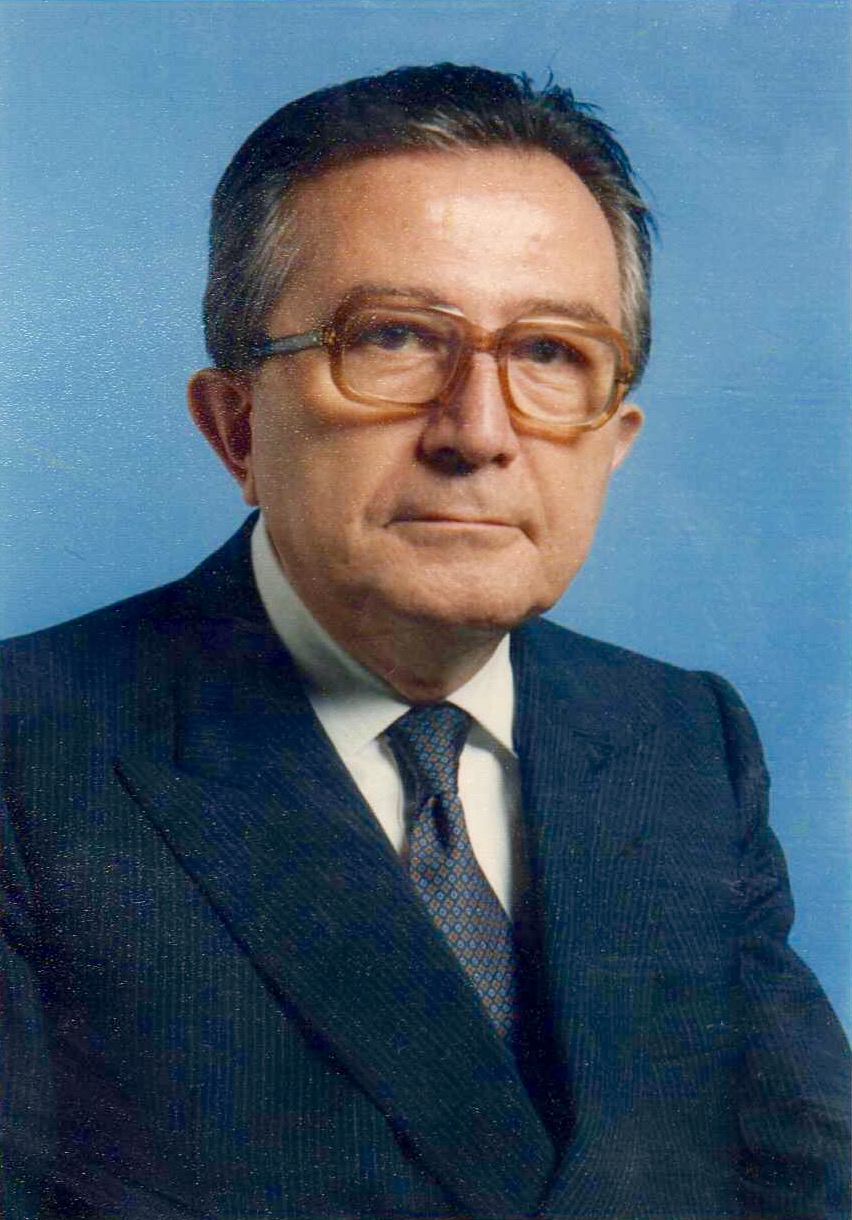

On October 24, 1990, Italian Prime Minister Giulio Andreotti sent a written statement to a parliamentary commission investigating terrorism and confirmed that a secret armed network called Gladio had existed in Italy since the 1950s [1]. It was a stay-behind organization, built with NATO and CIA support and staffed by civilians recruited and trained in secret, whose job was to go underground and wage guerrilla war if the Soviet Union invaded. Andreotti described the structure, and Italian authorities began locating the arms caches it had buried across the country.
The disclosure was not confined to Italy. Within weeks, similar networks were confirmed in most of Western Europe: SDRA8 in Belgium, P-26 in Switzerland, the Counter-Guerrilla in Turkey, and units in the Netherlands, France, West Germany, Greece, Norway, and Denmark. On November 22, 1990 the European Parliament passed a resolution condemning the clandestine structures, noting that they had operated outside parliamentary control, and calling on member states to investigate [2]. Belgium and Switzerland opened formal inquiries. The existence of the networks, their NATO coordination, and their concealment from elected governments are not in dispute. That is the settled part of the file.
The unsettled part is Italy in the 1970s. The Years of Lead ran from the Piazza Fontana bombing in Milan in December 1969, which killed seventeen people, through the Brescia and Italicus train bombings of 1974, to the Bologna railway station bombing of August 2, 1980, which killed eighty-five. Neofascist militants were convicted for Bologna. Licio Gelli, head of the illegal masonic lodge P2, was convicted of obstructing that investigation. Vincenzo Vinciguerra, a neofascist serving life for the 1972 Peteano car bombing, testified from prison that he had been protected by elements of the state and described a deliberate strategy of tension: attacks blamed on the left to drive the public toward a strong government [4].
Italian investigators took this seriously. The majority report of the Italian Senate's terrorism commission in 2000 concluded that the massacres of that period had been organized, promoted, or supported by men inside Italian state institutions and by men linked to United States intelligence structures [3]. It was a majority finding by a political body, not a court verdict, and the commission's minority dissented. No court has convicted a Gladio operative for a Years of Lead bombing on the basis of his Gladio membership.
The mainstream account, then, is precise about what it can and cannot say. NATO stay-behind armies existed, were hidden from the public and often from their own parliaments, and were disclosed in 1990. Some of the men in and around those networks were also in the far-right circles that carried out bombings. Whether the stay-behind structure itself was turned against European civilians is a live dispute, argued with real documents on both sides and settled by neither.
- [01] Andreotti, G. (1990). Statement to the Italian parliamentary commission on terrorism disclosing the existence of the Gladio stay-behind network.
- [02] European Parliament (1990). Resolution of 22 November 1990 on the Gladio affair, calling for national investigations.
- [03] Commissione parlamentare d'inchiesta sul terrorismo in Italia (2000). Report of the majority on the Years of Lead and the strategy of tension.
- [04] Ganser, D. (2005). NATO's Secret Armies: Operation Gladio and Terrorism in Western Europe. Frank Cass.
The networks are admitted. The fight is over what they did between the founding and the confession. Each claim has a traceable origin and a documented response. They are laid out in full so you can weigh them yourself.
The networks carried out the bombings
The strongest version holds that Gladio and its sister organizations were turned inward, and that the Years of Lead massacres were their work: attacks staged to be blamed on communists and to frighten voters away from the left [2][4]. The case rests on Vinciguerra's sworn testimony that he was sheltered by state structures, on the discovery that explosives used at Peteano matched a Gladio arms cache, and on the 2000 Senate commission's finding of state involvement [1]. The response is that no court has convicted anyone as a Gladio operative for those attacks, that the convicted Bologna bombers were neofascists whose organizational link to the stay-behind network was never established at trial, and that a matching explosive type is weaker evidence than it sounds when the same military stocks supplied many hands.
The networks were passive, but their secrecy was the shelter
A narrower argument concedes that Gladio never issued an order to bomb anything, and holds that this hardly matters. A clandestine armed structure, funded and shielded by the state, recruiting from the anti-communist far right and answerable to no parliament, creates exactly the environment in which the men who did plant bombs could move, arm themselves, and expect protection. Against it stands the difficulty of proving a negative space. Complicity by atmosphere is not a charge a court can try, which is why this reading is common among historians and rare among prosecutors.
The terrorism case is built on thin sources
Historians including Peer Henrik Hansen have argued that the popular Gladio literature leans on a small number of interviews, journalistic accounts, and documents of uncertain provenance, and that some of the alleged NATO directives underpinning the terrorism claim have never been produced in the original [3]. On this reading the stay-behind networks were real, indefensible in a democracy, and mostly what they said they were: caches, radios, and men waiting for an invasion that never came. Supporters of the terrorism case answer that the archives which would settle it remain classified in several countries, and that an argument from missing documents is weak when the state controls the cabinet they are locked in.
- [01] Vinciguerra, V. Testimony to Italian magistrate Felice Casson in the Peteano investigation, on state protection and the strategy of tension.
- [02] Ganser, D. (2005). NATO's Secret Armies. On the alleged operational use of stay-behind units against European civilians.
- [03] Hansen, P.H. (2011). Review essay on stay-behind historiography, Journal of Strategic Studies. On the sourcing problems in the terrorism case.
- [04] Cottrell, R. (2012). Gladio: NATO's Dagger at the Heart of Europe. Progressive Press.
INFORMAL READER POLL, NOT DATA. WHICH EXPLANATION DO YOU FIND MOST CREDIBLE?