OPERATION AJAX
In 1953 the CIA and British intelligence helped overthrow Iran's elected prime minister after he nationalized the country's oil. The US denied its role for decades, then declassified it.
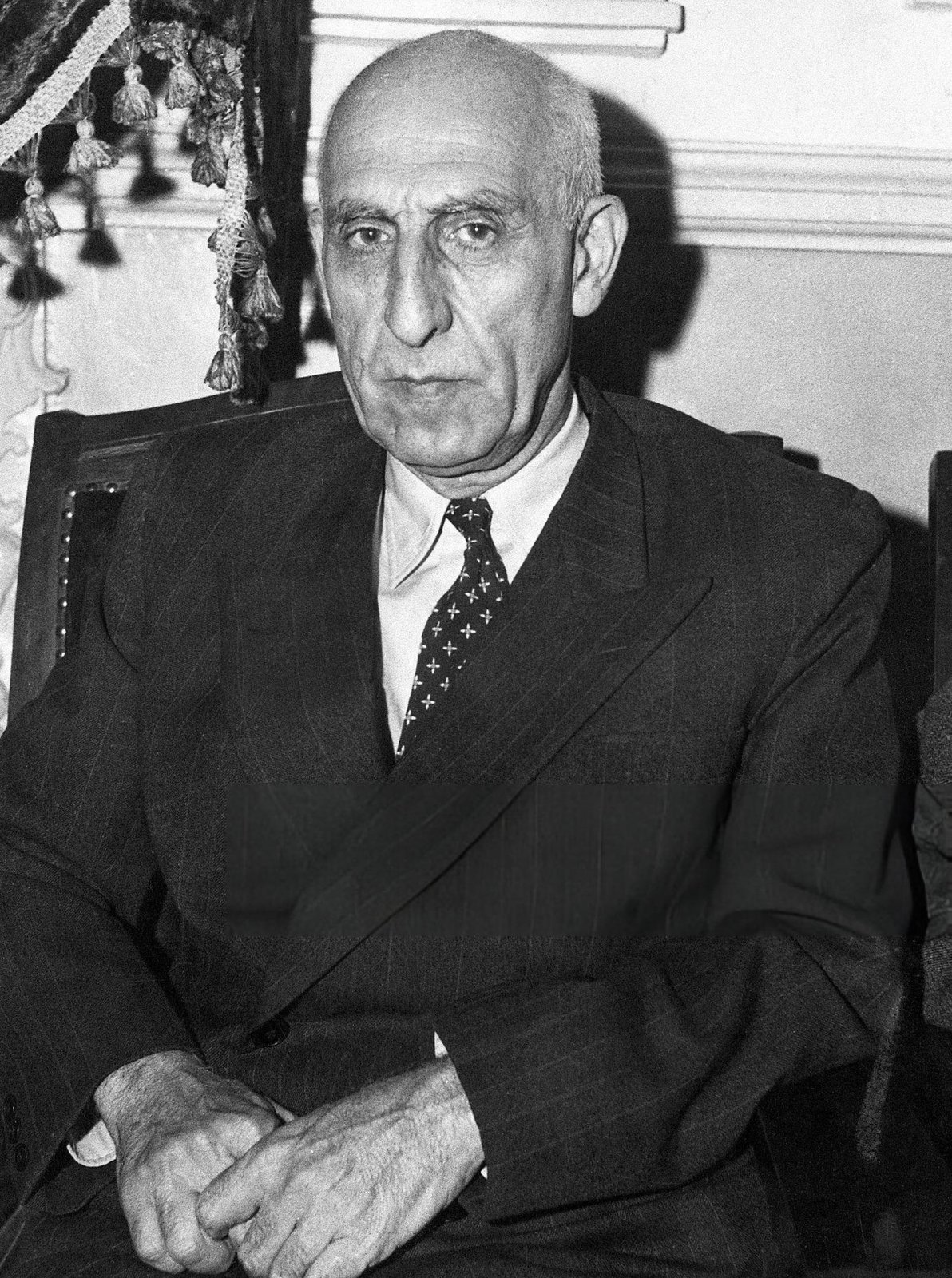

In August 1953 the elected government of Iran was overthrown in a coup organized with the United States Central Intelligence Agency and Britain's Secret Intelligence Service, MI6. The CIA called its part Operation TPAJAX; the British called theirs Operation Boot. The target was Prime Minister Mohammad Mosaddegh, and the outcome was the restoration of the political power of Shah Mohammad Reza Pahlavi [1].
The dispute behind it was oil. In 1951 Mosaddegh's government nationalized the Anglo-Iranian Oil Company, the British-owned firm that controlled Iran's oil and later became BP. Britain, which had profited heavily from the arrangement, sought to reverse it, imposed an embargo, and pressed the United States to act. American officials, viewing the crisis through the Cold War, feared that instability could push Iran toward the Soviet Union [4].
The operation itself is documented in detail. The CIA officer Kermit Roosevelt Jr. directed it from inside Iran, using bribed officials, paid newspapers, and organized crowds, including staged demonstrations meant to look like both pro-Mosaddegh and anti-Mosaddegh unrest. A first attempt in mid-August failed and the Shah briefly fled the country. A second push days later succeeded: Mosaddegh was arrested, tried, and held under house arrest until his death, and the Shah returned with expanded power [1].
For decades the United States would not confirm its role. Internal accounts leaked over the years, and in 2013 the CIA released a declassified internal history that stated the coup was carried out "as an act of US foreign policy," ending the official silence [2]. The long aftermath, the Shah's autocratic rule and secret police, the 1979 revolution, and lasting Iranian distrust of the United States, is widely traced to 1953. The documented record is clear: a real, foreign-organized coup against an elected government, now acknowledged by the government that helped run it.
- [01] Kinzer, S. (2003). All the Shah's Men. John Wiley & Sons.
- [02] National Security Archive (2013). CIA Confirms Role in 1953 Iran Coup, publishing the declassified internal history.
- [03] Gasiorowski, M.J. & Byrne, M., eds. (2004). Mohammad Mosaddeq and the 1953 Coup in Iran. Syracuse University Press.
- [04] Abrahamian, E. (2013). The Coup. The New Press.
The coup is documented, so the debate is over motive and how much the CIA actually decided the outcome. Each reading has a traceable origin and a documented response. They are laid out in full so you can weigh them yourself.
Mainly a British oil grab
One reading holds that the operation was driven above all by Britain's determination to recover its oil company, with American anticommunism as the cover story. The historian Ervand Abrahamian argues the oil nationalization, not a real Soviet threat, was the decisive motive [1]. This has strong support in the timeline, since the crisis began with nationalization and Britain pushed hardest. Where it is contested is that US files show genuine Cold War fear as well, so the cleaner claim is that oil and anticommunism reinforced each other rather than one being a pure pretext.
The CIA's role was overstated
A revisionist line, argued by Ray Takeyh and Darioush Bayandor, holds that internal Iranian forces, the clergy, the military, and Mosaddegh's own lost support, were decisive, and that the CIA has taken or been given more credit than it earned [2][3]. This is a serious scholarly position and a useful corrective to a Hollywood version of one American running Iran. Its limit is that the CIA's own declassified history describes active and well-funded involvement, so the argument narrows the agency's role rather than erasing it, and the balance between foreign and domestic causes is still debated.
A deliberate template for later coups
A third view treats Ajax less as a one-off than as the first successful model for CIA-backed regime change, pointing to Guatemala in 1954 and later operations. There is real substance here, since planners did study and cite the Iran operation. The claim overreaches when it implies a single master plan, because each later intervention had its own local drivers and mixed results, and treating Iran as the origin of everything that followed flattens a more complicated history into one storyline.
- [01] Abrahamian, E. (2013). The Coup. On the oil dispute as the central motive.
- [02] Takeyh, R. (2014). 'What Really Happened in Iran,' Foreign Affairs 93(4). Argues Iranian actors were decisive.
- [03] Bayandor, D. (2010). Iran and the CIA: The Fall of Mosaddeq Revisited. Palgrave Macmillan.