THE NIMITZ TIC-TAC ENCOUNTER
In November 2004 US Navy pilots off Baja California chased a wingless white object the size of a small aircraft. Radar tracked it, a jet filmed it, and the Pentagon later called the video real and unidentified.
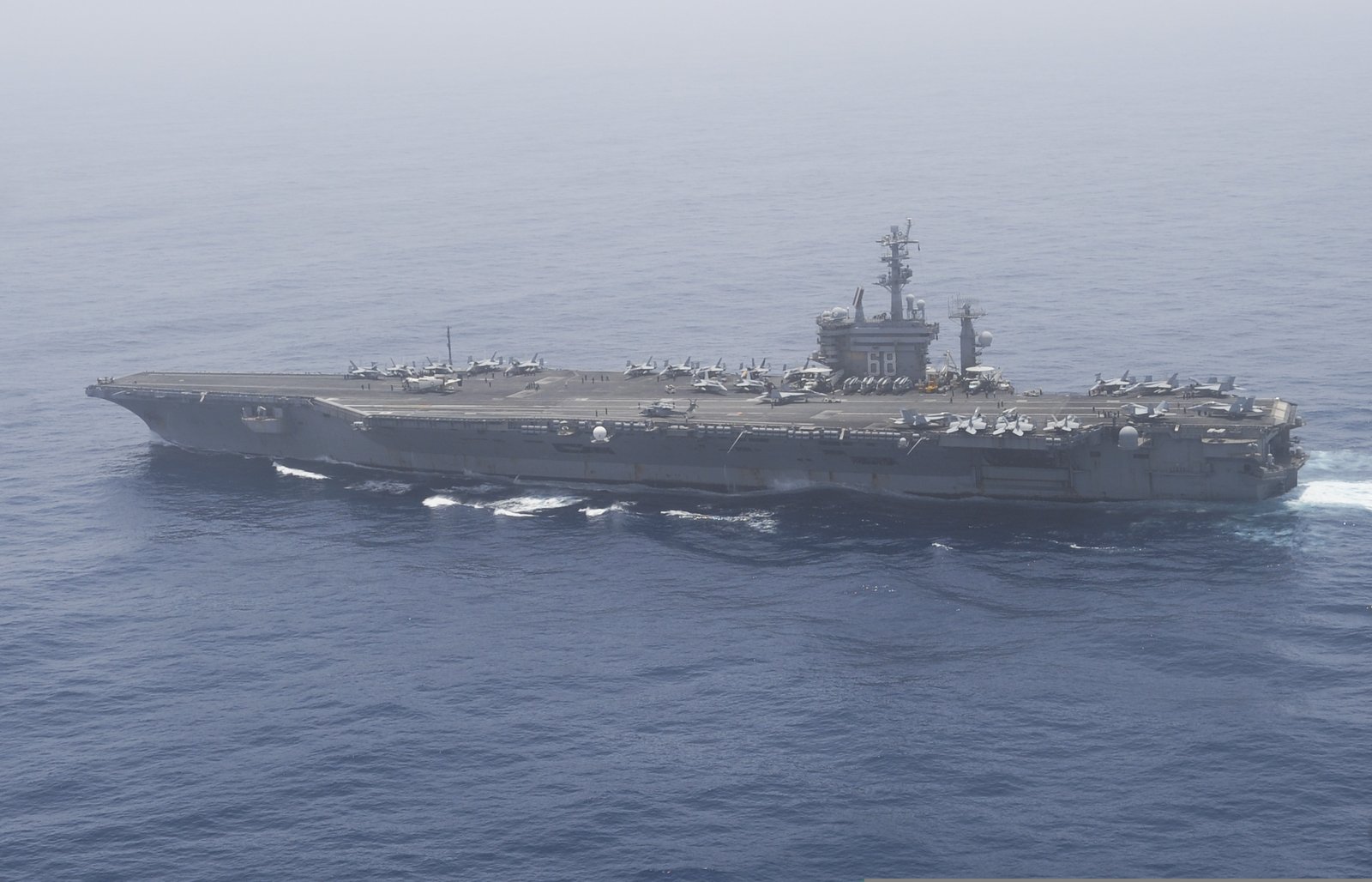
_transits_the_Indian_Ocean_June_11,_2013_130611-N-GA424-004.jpg)
In November 2004, aircraft from the USS Nimitz Carrier Strike Group operating off Baja California were directed toward objects that the cruiser USS Princeton had been tracking on radar for days, objects its operators said descended from around 80,000 feet to hover low over the sea. Commander David Fravor, flying an F/A-18F, reported a smooth white object with no wings, no exhaust, and no visible means of lift, roughly the size of a small aircraft, moving over a disturbance in the water before it accelerated out of sight. A second jet later recorded infrared footage that became known as the FLIR1 or Nimitz video [3].
The event stayed inside military channels until 2017, when The New York Times reported on a Pentagon program that had studied such incidents and published three Navy videos [3]. In 2019 and 2020 the Department of Defense took the unusual step of confirming that the videos were genuine, that their release had not been authorized, and that the objects in them remained unidentified [2].
In 2021 the Office of the Director of National Intelligence issued a preliminary assessment covering 144 military reports of unidentified aerial phenomena between 2004 and 2021. It concluded that most could not be explained with the available data, found no evidence that any were extraterrestrial, and also declined to rule that out, citing limited and inconsistent sensor records as the central problem [1]. The report stressed that scattered data and different instruments make firm identification hard.
Skeptical analysts have examined the footage closely. Mick West and others argue that parts of the Navy videos can be explained by known effects: infrared glare from a distant jet engine, the rotation of a targeting pod that makes an object appear to bank, and parallax against the sea that exaggerates apparent speed [4]. These analyses address the videos more than the combined radar-and-eyewitness account from 2004, which is harder to reduce to a single artifact. The documented position is a real, sincerely reported event, with authenticated sensor footage, that official review has left formally unidentified rather than solved.
- [01] Office of the Director of National Intelligence (2021). Preliminary Assessment: Unidentified Aerial Phenomena.
- [02] US Department of Defense (2020). Statement releasing three Navy videos and confirming they were unauthorized for prior release and remain 'unidentified.'
- [03] Cooper, H., Blumenthal, R. & Kean, L. (2017). 'Glowing Auras and Black Money,' The New York Times, December 16, 2017.
- [04] West, M. (2021-2023). Optical and parallax analyses of the FLIR1, Gimbal, and GoFast Navy videos.

The 2004 encounter has drawn explanations beyond an unidentified object caught by real sensors. Each has a traceable origin and a documented response. They are laid out in full so you can weigh them yourself.
An advanced secret US program
One reading holds that the Tic Tac was a classified American craft or drone, since a test kept from a carrier group's own pilots would look exactly like an unknown [1]. The response: the reported performance, a sudden drop from very high altitude and acceleration with no wings or exhaust, exceeds any acknowledged aircraft by a wide margin, and it is unclear why the US government would later spend official effort confirming and studying its own hardware as unidentified. The secret-program idea explains the secrecy but not the flight characteristics.
A foreign adversary breakthrough
A national-security reading, advanced by former defense officials, treats the objects as craft from a rival state that has made an unannounced leap in propulsion, which would make the sightings a surveillance and technology problem rather than a scientific mystery [3]. Set against it, the same physics objection applies: no known nation has demonstrated flight without visible lift or exhaust at the speeds described, and a fielded adversary system operating repeatedly near a US carrier would be expected to appear elsewhere in the two decades since. The concern is real; the evidence for a specific rival is not in the public record.
A craft of non-human origin
The most far-reaching claim is that the object was built by a non-human intelligence, resting on the pilots' credibility and on performance no human program is known to match [2]. The 2021 government assessment declined to endorse this and also declined to exclude it, and that is where the public evidence sits. What is missing is any recovered material, clear high-resolution imagery, or repeatable measurement, and without one of those the non-human explanation remains an inference from a gap rather than a demonstrated cause.
- [01] Mellon, C. and former AATIP staff, public statements (2017 onward) on unidentified craft outperforming known aircraft.
- [02] Kean, L. (2010). UFOs: Generals, Pilots, and Government Officials Go on the Record. Harmony Books.
- [03] Congressional testimony on UAP (2022-2023), House and Senate hearings on military encounters and reporting gaps.
INFORMAL READER POLL, NOT DATA. WHICH EXPLANATION DO YOU FIND MOST CREDIBLE?