THE MARY CELESTE
In 1872 a seaworthy ship was found sailing the Atlantic with no one aboard, its cargo and stores intact and its lifeboat gone. Why ten people abandoned a sound vessel is still argued.
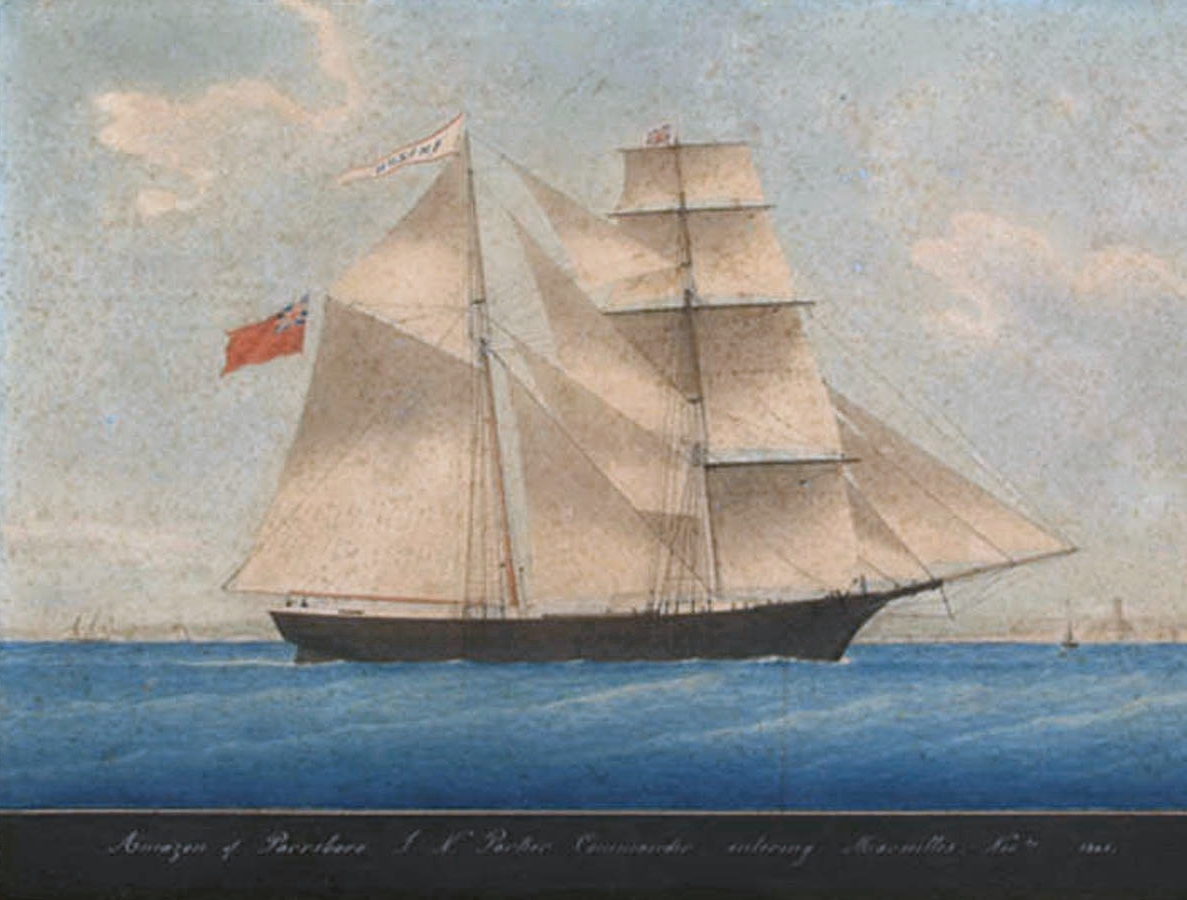

The Mary Celeste was an American brigantine that left New York on November 7, 1872, bound for Genoa with a cargo of 1,701 barrels of industrial alcohol. On board were Captain Benjamin Briggs, his wife, their two-year-old daughter, and a crew of seven. On December 4, the British ship Dei Gratia found her sailing erratically in the Atlantic east of the Azores with no one aboard. The ship was seaworthy and mostly in order, with about six months of food and water, the crew's personal belongings still in place, and the cargo nearly intact. The single lifeboat was gone, and so was the ship's chronometer, sextant, and papers, the tools a captain takes when he means to leave in an orderly way [2].
There was no sign of violence, no bodies, and no clear damage that would sink her. The Gibraltar Vice-Admiralty Court held a salvage inquiry, and its investigator, Frederick Solly-Flood, suspected foul play or fraud, but the survey turned up no supporting evidence, and the Dei Gratia crew were eventually awarded a reduced salvage payment [1]. The central puzzle has stood ever since: why ten people would launch a small boat and leave a sound ship in the open ocean.
The most durable explanation involves the cargo. Nine of the alcohol barrels were later found empty, and denatured alcohol can leak and give off vapor, especially with a change in temperature. In this reconstruction Briggs, fearing an explosion, ordered everyone into the lifeboat and had it tied to the ship by a line, intending to wait at a safe distance and reboard once the danger passed. A squall or a parted line then separated the boat from the ship, and the people in it were lost while the Mary Celeste sailed on alone [1]. Related versions add a faulty pump, a misread depth sounding, or a waterspout that made the crew think the ship was flooding.
Much of what people believe about the case is fiction. In 1884 a young Arthur Conan Doyle published a short story, spelling the name Marie Celeste, that invented details such as meals still warm on the table and a ship in perfect untouched order [4]. Those inventions spread as facts and made the abandonment seem more impossible than the record shows. The mainstream account is a sound ship left in a hurry for a reason the crew judged urgent, most likely a fear about the cargo or the ship's safety, followed by the loss of an overloaded small boat at sea.
- [01] Begg, P. (2005). Mary Celeste: The Greatest Mystery of the Sea. Longman. Archival reconstruction of the voyage and inquiry.
- [02] Gibraltar Vice-Admiralty Court (1873). Salvage hearing records, including the survey of the ship and cargo.
- [03] Hicks, B. (2004). Ghost Ship. Ballantine Books. Narrative history of the crew and the investigation.
- [04] Doyle, A.C. (1884). J. Habakuk Jephson's Statement. Cornhill Magazine. The fictional source of many later 'facts.'
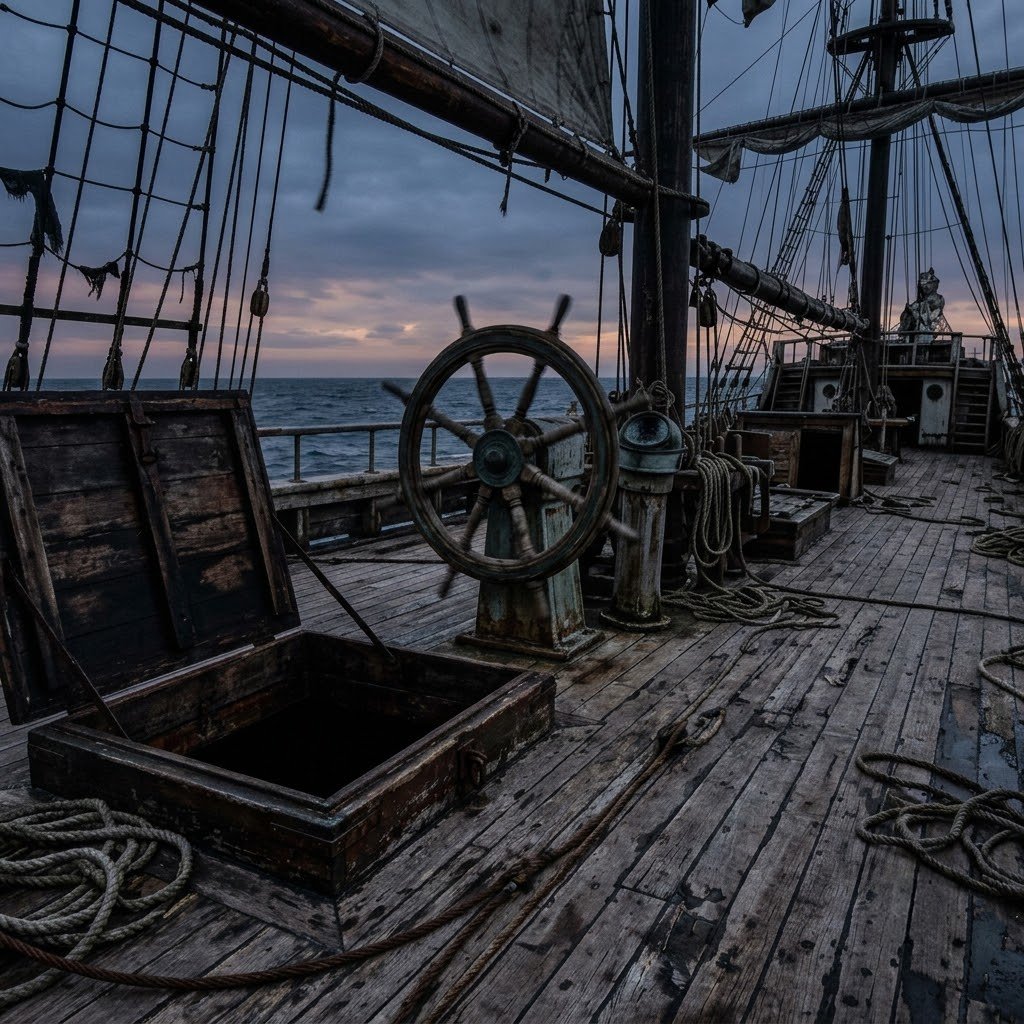
The abandonment has drawn explanations beyond a panicked evacuation. Each has a traceable origin and a documented response. They are laid out in full so you can weigh them yourself.
Piracy, mutiny, or murder
One line of thought holds that the crew were killed, whether by pirates, by a mutiny, or by a captain or sailor who lost control [3]. The response: the ship still held its cargo and the crew's valuables, which is the opposite of what pirates leave behind, the survey found no blood or signs of a struggle, and the people aboard included the captain's wife and small child, which fits a shared emergency better than a violent one. Robbery and murder both tend to leave traces the inquiry looked for and did not find.
An insurance or salvage conspiracy
The Gibraltar investigator suspected a scheme, perhaps a plot between Briggs and the Dei Gratia's captain, Morehouse, to fake an abandonment and split a salvage award [1]. Set against it, the two captains were friendly, which fed the suspicion, but the salvage payment was reduced precisely because the court could not clear the arrangement, no share of money was ever traced, and Briggs would have had to sacrifice his own family and ship for a modest and uncertain payout. The suspicion was real and the evidence for it never materialized.
A sudden threat at sea
A third group of explanations keeps the crew honest and looks for a single frightening event, a seaquake, a waterspout, or a sudden belief the ship was sinking, that drove a hasty and fatal decision to take the boat [2]. This is close to the mainstream reading and is the hardest to disprove, since a scare leaves little wreckage. It is also the hardest to confirm for the same reason, which is why the specific trigger, whether cargo fumes, a pump reading, or the weather, remains the open part of an otherwise ordinary tragedy.
- [01] Gibraltar Vice-Admiralty Court (1873). Solly-Flood's foul-play and fraud suspicions in the salvage record.
- [02] Begg, P. (2005). Mary Celeste. Reviews and weighs the conspiracy and murder theories.
- [03] Fanthorpe, L. & Fanthorpe, P. (2005). The World's Greatest Unsolved Mysteries. Dundurn. Catalogs the range of claims.
INFORMAL READER POLL, NOT DATA. WHICH EXPLANATION DO YOU FIND MOST CREDIBLE?