THE LAB LEAK HYPOTHESIS
Five years after the first known cases in Wuhan, the U.S. intelligence community still cannot agree on how SARS-CoV-2 reached people. Natural spillover and an accidental laboratory release are both official government assessments, not a mainstream answer against a fringe one.
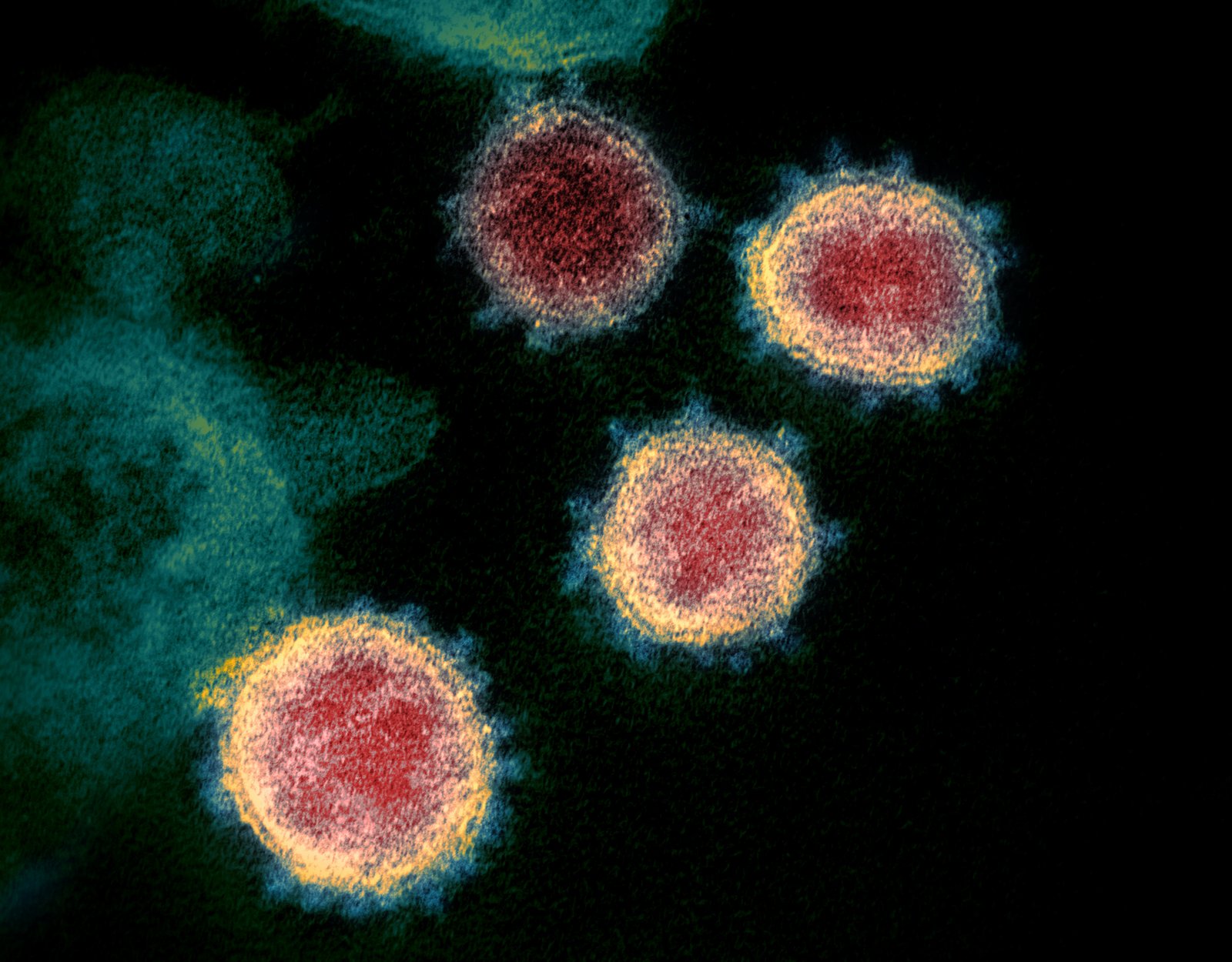

No single U.S. government body has ever issued a unified finding on how SARS-CoV-2 reached people. What exists instead is a standing split inside the intelligence community itself, restated and partially revised every year since 2021, between two officially assessed explanations. Both carry low or moderate confidence. Neither has been ruled out by any agency that has taken a position.
Natural spillover from an infected animal
The National Intelligence Council and four other intelligence community elements assess with low confidence that the first infection most likely came from an animal carrying the virus or a close relative of it, the same pathway documented for SARS in 2002 and MERS in 2012 [1]. This is the position closest to the pre-2020 baseline expectation for a novel coronavirus, and it does not require any breach of a research facility to explain the outbreak's origin in Wuhan, a city with wildlife markets that have hosted prior spillover events. No animal carrying a direct SARS-CoV-2 ancestor has been identified as of this writing, which the assessment itself lists as the main gap in the case [1].
Accidental release during research
The FBI has assessed with moderate confidence, and the Department of Energy and CIA have each separately assessed with low confidence, that the pandemic most likely began with an unintentional accident connected to research [2][3]. The Wuhan Institute of Virology, located in the city where the first cluster was identified, was running coronavirus research work at the time. None of the three agencies has published the specific intelligence behind its assessment, and each has stated its confidence level explicitly, using the same reserved language intelligence agencies use for the natural-origin position [3]. Three other intelligence community elements have not coalesced around either explanation.
The scientific case against a lab-related origin, cited for years as close to dispositive, has itself become part of the documented record under scrutiny. The March 2020 paper "The Proximal Origin of SARS-CoV-2," published days after a National Institutes of Health-convened call among its authors, argued publicly against an engineered or lab-related virus [4]. A 2023 congressional review of the authors' private Slack messages from the same period showed at least one author privately estimating meaningfully higher odds of a lab-related origin than the published paper conveyed. The author in question testified before the House Oversight Select Subcommittee on the Coronavirus Pandemic and denied that the paper was written to order for any official [2]. No finding from that testimony altered the IC's confidence levels on either side of the split described above.
- [01] Office of the Director of National Intelligence. Updated Assessment on COVID-19 Origins. Declassified, October 29, 2021.
- [02] U.S. House Permanent Select Committee on Intelligence. Final Unclassified Summary, COVID-19 Origins. December 2022.
- [03] Central Intelligence Agency statement on updated COVID-19 origins assessment, reported by multiple outlets, January 2025.
- [04] Andersen, K.G., Rambaut, A., Lipkin, W.I., Holmes, E.C., Garry, R.F. The Proximal Origin of SARS-CoV-2. Nature Medicine 26, 450-452 (2020).
Beyond what any of the three lab-leaning agencies have officially assessed, two further claims circulate that no U.S. government body has adopted as its own position. Both have a real documented starting point. Neither has produced the evidence needed to move an agency's confidence level.
The natural-origin case was shaped, not just published
The strongest version of this claim points to the Slack messages released by Senate investigators, showing that Proximal Origin's own lead author privately estimated meaningfully higher odds of a lab-related origin days before publishing a paper that argued the opposite in public [2]. House investigators went further, alleging the paper was coordinated with health officials who wanted a rapid public counter to media lab-leak coverage, and that a National Institutes of Health-funded grant tied to one author was mischaracterized in later congressional testimony [1]. Set against this: the author named in both reports testified under oath, denied that the paper was written at anyone's direction, and pointed out that scientific uncertainty at the time of writing is not the same as bad faith. No perjury charge or other legal action has followed the testimony.
Deliberate release or bioweapon development
A minority of commentators argue the virus was engineered as a weapon, a claim distinct from the accident-prone but legitimate research the FBI, DOE, and CIA assessments describe. This traces partly to genuine published debate over SARS-CoV-2's furin cleavage site, a feature some virologists flagged as unusual enough to warrant scrutiny of gain-of-function funding pathways that supported earlier coronavirus research at the Wuhan Institute of Virology [3]. Every U.S. intelligence agency that has taken a position on origin, including the three now leaning toward an accidental lab-related release, has explicitly assessed that the virus was not developed as a biological weapon. The furin site debate remains open among virologists on technical grounds, but it has not produced a documented finding of intentional design from any agency, laboratory, or independent research team that has examined the genome.
- [01] U.S. House Committee on Oversight and Government Reform, Select Subcommittee on the Coronavirus Pandemic. Report on Proximal Origin authors and NIH, 2023-2024.
- [02] U.S. Senate Committee on Homeland Security and Governmental Affairs. Slack message document release, Proximal Origin authors, 2024.
- [03] Deigin, Y. and Segreto, R. SARS-CoV-2's Furin Cleavage Site Absent in Closest Relatives. BioEssays 43(3), 2021, and related public commentary by the authors on gain-of-function research funding pathways.