THE IRAN-CONTRA AFFAIR
The United States secretly sold missiles to Iran, a state it called a sponsor of terrorism, and used the money to arm rebels in Nicaragua that Congress had explicitly refused to fund. Fourteen people were charged. Six were pardoned.
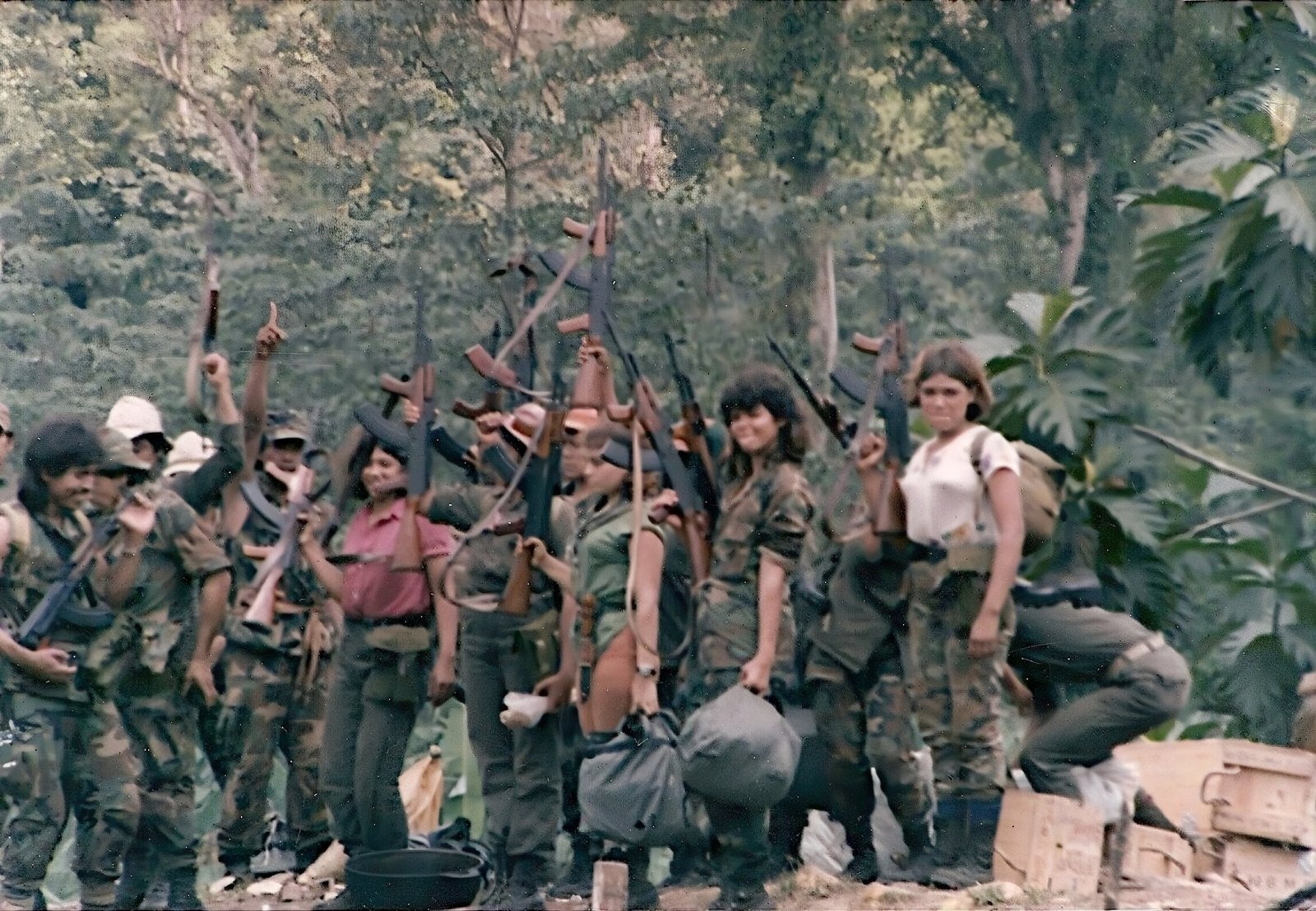

Two secret operations collided in the Reagan White House, and each was illegal on its own.
The first was Iran. In 1985 and 1986 the United States sold weapons to Iran, including TOW antitank missiles and Hawk missile parts, routed through Israel. Iran was under an American arms embargo and on the State Department's list of state sponsors of terrorism, and the United States was publicly committed to a policy of never negotiating with hostage takers. The sales were made anyway, in the hope that Iran would use its influence to free American hostages held in Lebanon. Some hostages were released. More were taken [1].
The second was Nicaragua. The Reagan administration wanted to fund the Contra rebels fighting the Sandinista government. Congress did not, and said so in law: the Boland Amendment, in its various forms between 1982 and 1984, prohibited the CIA and the Department of Defense from spending funds to support the Contras militarily [3].
The connection between the two was the diversion. Lieutenant Colonel Oliver North, working from the National Security Council staff, arranged for the Iranian arms to be sold at a markup and for the excess proceeds to be routed to the Contras, funding the exact war Congress had defunded. The money moved through Swiss accounts and a private network of arms dealers and retired officers, outside any appropriation, outside any oversight, and hidden from the committees that had passed the prohibition [2][4].
It unraveled in October and November 1986, when a Contra supply plane was shot down over Nicaragua and its surviving American crewman was captured, and a Lebanese magazine published the arms-for-hostages story. Attorney General Edwin Meese announced the diversion on November 25. Documents were shredded. North's secretary, Fawn Hall, later testified to smuggling classified papers out of the building in her clothing.
Three investigations followed: the Tower Commission, a joint congressional inquiry, and a seven-year independent counsel investigation under Lawrence Walsh. Fourteen people were charged. Eleven were convicted, including North, National Security Adviser John Poindexter, and Assistant Secretary of State Elliott Abrams. The convictions of North and Poindexter were later vacated on appeal, on the grounds that their trials had been tainted by their own immunized congressional testimony. On December 24, 1992, President George H.W. Bush pardoned six of the remaining figures, including former Secretary of Defense Caspar Weinberger, whose trial had not yet begun and whose notes Walsh considered central evidence [2].
The facts are not in dispute. This is what the government did, established by its own commissions, its own prosecutors, and its own courts.
- [01] Tower Commission (1987). Report of the President's Special Review Board.
- [02] Walsh, L.E. (1993). Final Report of the Independent Counsel for Iran/Contra Matters.
- [03] Congressional Committees Investigating the Iran-Contra Affair (1987). Report, including the minority views.
- [04] Kornbluh, P. & Byrne, M., eds. (1993). The Iran-Contra Scandal: The Declassified History. The New Press.
The crimes are established. What the investigations could not settle is how far up it went and what else the network was carrying. Each claim has a traceable origin and a documented response. They are laid out in full so you can weigh them yourself.
Reagan knew and directed it
Walsh concluded that Reagan had known about and approved the arms sales to Iran, and that he had created the conditions for the diversion, but that the evidence did not establish beyond a reasonable doubt that he knew the money was going to the Contras [1]. Reagan told the Tower Commission he could not remember whether he had approved the first Israeli shipment. Poindexter testified that he had deliberately not told the President about the diversion so that Reagan would have deniability, which is either an act of loyal insulation or a confession of a cover story, and the record cannot distinguish them. The pardons closed the last route to an answer. Weinberger's notes, which Walsh believed would have shown what the President knew, never reached a jury.
The operation ran drugs to pay for itself
Gary Webb's 1996 Dark Alliance series argued that Contra-linked traffickers helped seed the crack cocaine epidemic in Los Angeles, and it destroyed his career [2]. The claim has a documented core and a disputed reach. The 1989 Kerry Committee found that individuals supporting the Contras were involved in drug running, and that the State Department paid funds to companies owned by traffickers [4]. The CIA's own inspector general reported in 1998 that the agency had known of allegations against Contra-related individuals and had not consistently reported them to law enforcement [3]. What none of these establish is Webb's strongest implication, that the agency directed or intended the crack trade. The narrower finding is bad enough and is not seriously contested: the United States kept working with people it knew were moving cocaine, because they were useful.
It was a rogue operation the White House did not control
North's defense, and the argument of the congressional minority report, was that this was a small group of committed officers improvising in the gap left by a Congress that had tied the President's hands. Against it stands the paper: the diversion memos, the chain of approvals, the finding signed by Reagan authorizing the arms sales, and the fact that the Attorney General's own inquiry found documents being altered and destroyed while it was underway. An operation is not rogue when the National Security Adviser is running it and the Attorney General has to shut it down.
- [01] Walsh, L.E. (1993). Final Report of the Independent Counsel, on what the evidence showed about President Reagan's knowledge and on the effect of the pardons.
- [02] Webb, G. (1996). Dark Alliance. San Jose Mercury News series, later expanded into a book.
- [03] Central Intelligence Agency, Office of Inspector General (1998). Hitz Report, Volume II, on the agency's knowledge of drug trafficking allegations against Contra-related individuals.
- [04] Kerry Committee (1989). Senate Subcommittee on Terrorism, Narcotics and International Operations, Drugs, Law Enforcement and Foreign Policy.