THE HESSDALEN LIGHTS
Lights have appeared in a Norwegian valley since the early 1980s. Rather than argue about them, scientists built an automated observatory in the valley and have been recording them ever since.
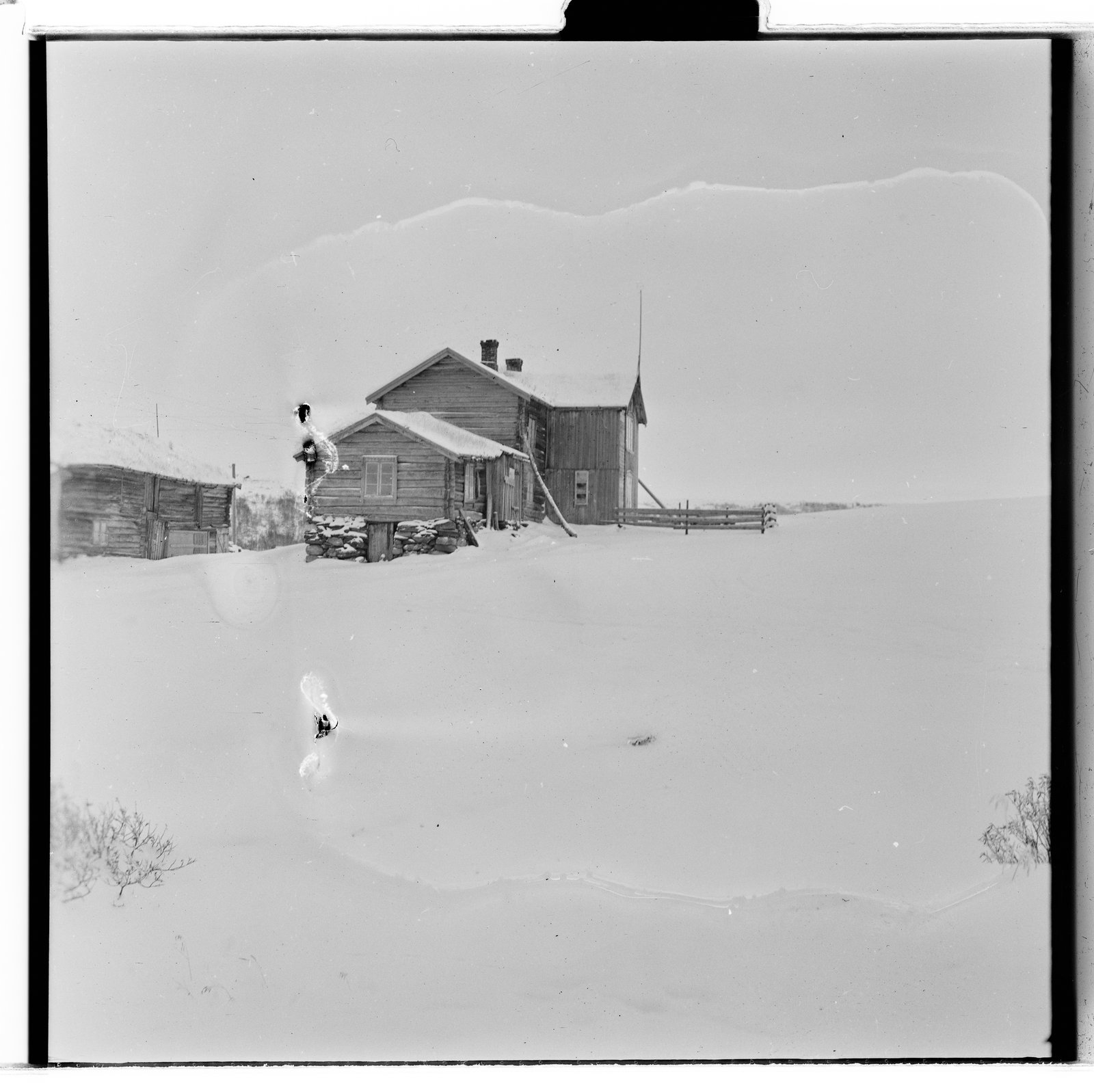

Hessdalen is a valley in central Norway, thinly populated, about nine miles long. Beginning around December 1981, residents started reporting lights: sometimes white or yellow, sometimes red, sometimes hovering for an hour, sometimes shooting down the valley at high speed. At the peak, in 1983 and 1984, sightings were running at fifteen to twenty a week. People were frightened enough that some left their homes.
What happened next is the reason this entry exists, and it is close to unique in this archive. Instead of arguing about eyewitnesses, a group of researchers went to the valley and set up instruments. Project Hessdalen began field work in 1984 with cameras, radar, a seismograph, magnetometers, a spectrum analyzer, and an infrared viewer, and they stayed for a month of continuous observation [3]. In 1998 they built a permanent automated measurement station in the valley that photographs the sky and triggers on light events, and it has been running ever since, operated with Ostfold University College [1].
So the phenomenon is not a matter of testimony. It has been photographed, tracked on radar, and analyzed spectroscopically for four decades.
What the measurements show is a genuinely odd object. Spectra taken by Massimo Teodorani and colleagues indicate a thermal plasma with no clear molecular signature, radiating over a broad range, with luminosity varying wildly and energies estimated in the kilowatt to megawatt range. Some events register on radar and some do not. Some appear as clusters of smaller lights that move in formation and then merge. The lights do not appear to be hot in the way a flame is hot, and they do not leave residue [2].
The candidate explanations are all physical and none is confirmed. The leading proposal is some form of ionized gas or dusty plasma, possibly sustained by an unusual local chemistry: the valley floor contains significant deposits of zinc, iron, and copper, and there is a river with sulfurous water running through it, which has led to suggestions that the valley is behaving like a natural battery, or that dust particles are becoming charged and confining a plasma bubble [4]. A related hypothesis attributes the energy to piezoelectric discharge from quartz-bearing rock under tectonic strain.
The honest summary from the researchers themselves is that a real, repeatable, instrumented phenomenon exists in that valley, that it is very likely a plasma of some kind, and that nobody has demonstrated the mechanism that produces or sustains it. A fraction of recorded events are also plainly mundane, and the project says so. What is left is smaller than the legend and more solid than most things in this archive, because it is the rare case where the mystery agreed to be measured.
- [01] Project Hessdalen (1984 onward). Field reports and the automated measurement station, Ostfold University College.
- [02] Teodorani, M. (2004). A long-term scientific survey of the Hessdalen phenomenon. Journal of Scientific Exploration 18.
- [03] Strand, E.P. (1984). Project Hessdalen final technical report.
- [04] Paiva, G.S. & Taft, C.A. (2010). A hypothetical dusty plasma mechanism of Hessdalen lights. Journal of Atmospheric and Solar-Terrestrial Physics 72.
The lights are recorded, so nobody has to argue about whether they exist. The argument is about what makes them. Each claim has a traceable origin and a documented response. They are laid out in full so you can weigh them yourself.
It is a dusty plasma sustained by the valley itself
The most developed physical proposal holds that dust particles in the air become electrically charged and confine a bubble of ionized gas, producing a long-lived glowing object that a plain plasma could not sustain [1]. The valley's geology cooperates with the idea, since the floor is rich in metal ores and a sulfurous river runs through it, which has led to the suggestion that the ground functions as a large natural battery. The trouble is that the mechanism has not been reproduced. Nobody has made a dusty plasma in a laboratory that behaves like the objects on the Hessdalen recordings, hovering for an hour and then accelerating down a valley, and until someone does, this is a hypothesis with good manners rather than a demonstration.
The energy comes from rock under strain
Paul Devereux's earth-lights hypothesis proposes that tectonic stress in quartz-bearing rock releases charge piezoelectrically, ionizing the air above fault lines, and it would explain why light phenomena cluster in particular geologies [2]. It has an obvious test, which is correlation with seismic activity. Project Hessdalen has run a seismograph in the valley since the beginning, and the correlation has not appeared. That is not fatal, since strain below the threshold of detectable quakes could still be releasing charge, but it means the theory's most checkable prediction has not been met on the one site where it has been checked hardest.
Most of it is ordinary and the rest is noise
The deflationary reading points out that the project itself attributes a share of recordings to aircraft, car headlights on distant roads, and misidentified astronomical objects, and argues the unexplained remainder is what any long observing run produces. This deserves respect and it is the researchers' own starting position. Where it runs out is the spectroscopy. Teodorani's measurements describe objects radiating at kilowatt to megawatt levels with no clear molecular signature, which is not what a car headlight or a planet looks like through a spectrometer [3]. Something is in that valley. The instruments have been saying so for forty years, and the failure to name it is not the same as the failure to find it.
- [01] Paiva, G.S. & Taft, C.A. (2010). A hypothetical dusty plasma mechanism of Hessdalen lights.
- [02] Devereux, P. (1989). Earth Lights Revelation. Blandford. The tectonic-strain hypothesis.
- [03] Teodorani, M. (2004). A long-term scientific survey of the Hessdalen phenomenon, on the energy estimates and the unresolved events.
INFORMAL READER POLL, NOT DATA. WHICH EXPLANATION DO YOU FIND MOST CREDIBLE?