THE GULF OF TONKIN INCIDENT
A reported second attack on US destroyers in August 1964 sent Congress toward war in Vietnam. Four decades later the National Security Agency released a study finding the second attack never happened.
_in_August_1964.jpg)
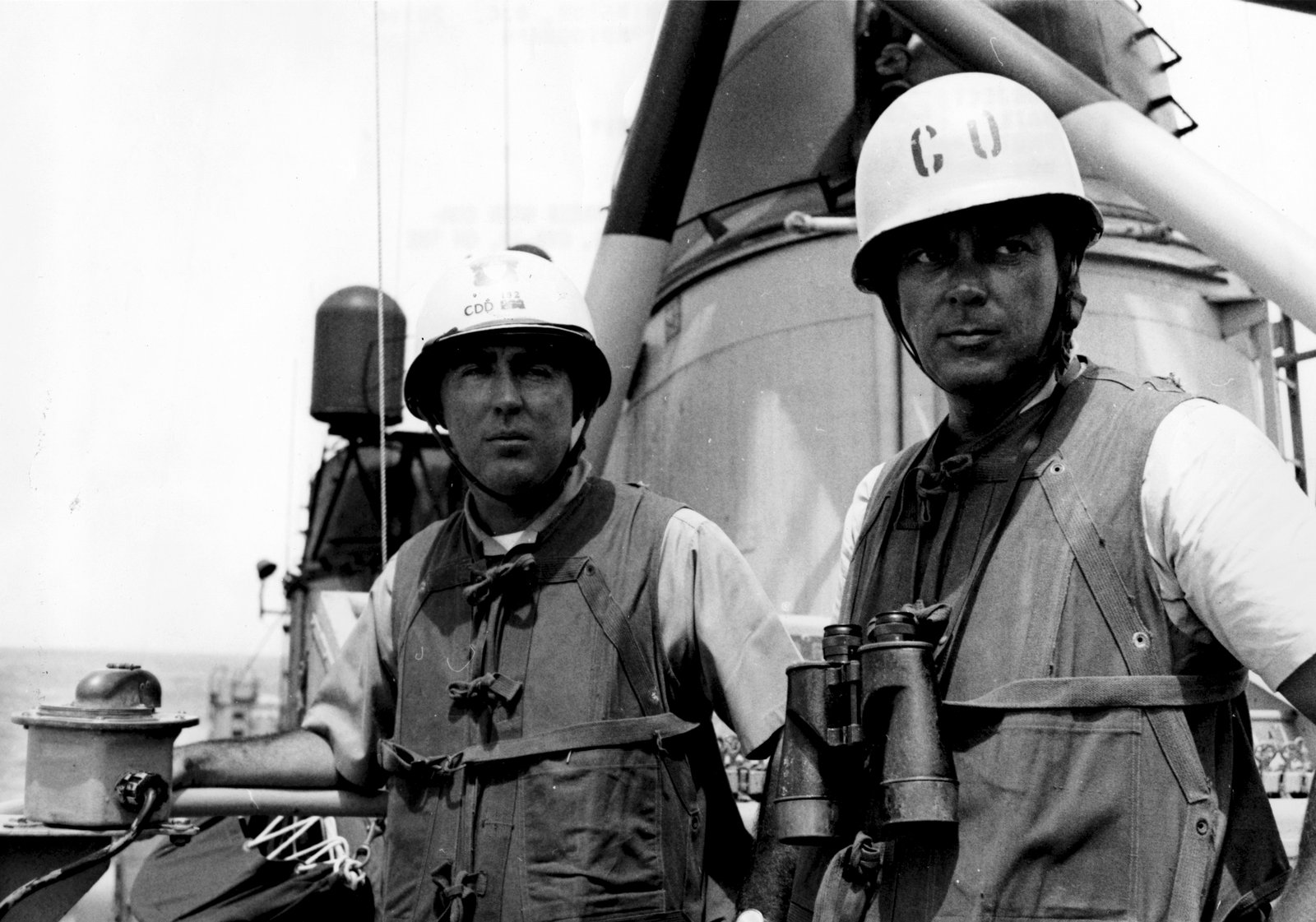
On August 2, 1964, the destroyer USS Maddox exchanged fire with three North Vietnamese torpedo boats in the Gulf of Tonkin. That engagement is not disputed. Two nights later, on August 4, the Maddox and a second destroyer, the Turner Joy, reported that they were under attack again during a dark and stormy night, reading enemy boats on radar and sonar and firing for hours. The reported second attack became the trigger. On August 7 Congress passed the Gulf of Tonkin Resolution, which gave President Lyndon Johnson broad authority to use force in Southeast Asia and served as the legal basis for the American escalation in Vietnam [4].
Doubt about the second night existed at the time. Officers on the Maddox, including its captain, sent cables warning that freak weather, overeager sonar operators, and the absence of any visual confirmation made the contacts questionable, and Johnson himself privately doubted whether anything had been there. The Pentagon Papers, the leaked internal defense study, later exposed how thin the basis for escalation had been [3].
The clearest verdict came from the agency that had collected the signals intelligence. In an internal study written in 2001 and declassified in 2005, the NSA historian Robert Hanyok concluded that the August 4 attack did not happen [1]. He found that intercepts had been misread and mishandled, that reports supporting an attack were kept while contradicting ones were set aside, and that the surviving evidence pointed to North Vietnamese messages about the August 2 battle and the recovery of a damaged boat, not a fresh assault.
The historian Edwin Moïse reached the same core finding through the archives: the first clash was real, the second was not [2]. What remains debated is intent, whether the errors of August 4 were honest confusion in a tense night or something the administration was willing to believe because it wanted the authority the incident produced. The mainstream account settles the event and leaves the motive open.
- [01] Hanyok, R.J. (2001). Skunks, Bogies, Silent Hounds, and the Flying Fish. NSA Cryptologic Quarterly. Declassified and released in 2005.
- [02] Moïse, E.E. (1996). Tonkin Gulf and the Escalation of the Vietnam War. University of North Carolina Press.
- [03] United States Department of Defense (1971). The Pentagon Papers. Study of decision-making on Vietnam.
- [04] US Congress (1964). Gulf of Tonkin Resolution, Public Law 88-408, August 7, 1964.
The reported second attack has drawn explanations beyond honest confusion. Each has a traceable origin and a documented response. They are laid out in full so you can weigh them yourself.
A pretext manufactured for war
The strongest version holds that officials invented the August 4 attack to obtain the war authority they already wanted [1]. The response: the NSA's own historian, who had every reason to find a clean answer, concluded that the failure was skewed analysis rather than a fabricated event, with real intercepts misread under pressure. Deliberate invention and motivated error can look similar from outside, and the declassified record leans toward the second without ruling the first entirely out.
Doubtful intelligence used knowingly
A more restrained claim accepts that the attack was a mistake but argues the administration pushed ahead while knowing the evidence was shaky, treating a probable non-event as a certain one [3]. This fits the timeline well, since the captain's cautioning cables and Johnson's private doubts are both documented, and Congress voted on a version stripped of that uncertainty. It stops short of calling the incident staged and instead locates the fault in how a genuine doubt was presented as settled fact.
A confrontation the raids provoked
A third reading widens the frame to OPLAN 34A, the covert South Vietnamese commando raids on the North Vietnamese coast that the Maddox patrols operated near [2]. In this view the destroyers were part of a provocative posture that invited the August 2 clash, so the war was set in motion by policy rather than by any single night's radar. The raids are real and documented; the limit of the argument is that it explains the tension around the first battle better than it explains the reporting of the second.
- [01] Ellsberg, D. (2002). Secrets: A Memoir of Vietnam and the Pentagon Papers. Viking. On what officials knew and when.
- [02] Prados, J. (2004). Essays on the Gulf of Tonkin, National Security Archive. On OPLAN 34A raids and context.
- [03] Hanyok, R.J. (2001). NSA study, declassified 2005. On whether the intelligence errors were deliberate.