CLEVER HANS
A horse in 1900s Berlin seemed to do arithmetic by tapping its hoof. A young psychologist found it was reading tiny movements in the people asking the questions, a discovery that changed how experiments are run.
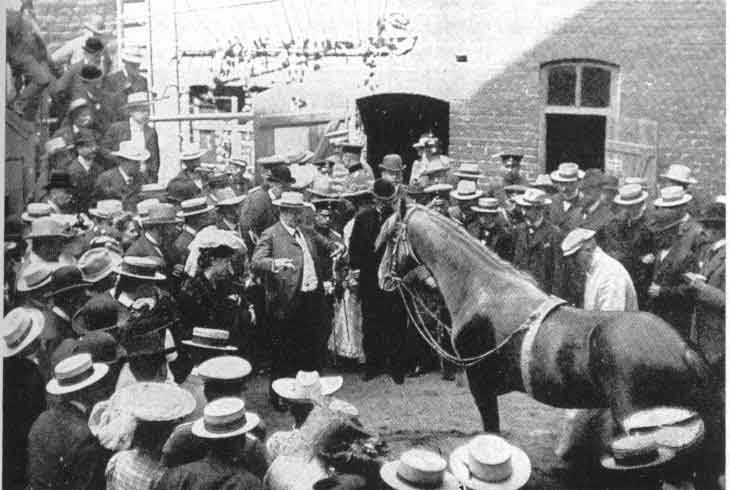

In the early 1900s a horse named Hans drew crowds in Berlin. His owner, a retired schoolteacher named Wilhelm von Osten, presented Hans as able to do arithmetic, tell time, read, and spell, answering by tapping a hoof the correct number of times or pointing to letters. Hans got the answers right often enough that a public commission of scientists and animal experts examined him in 1904 and found no trickery or hidden signals from von Osten, who appeared entirely sincere.
The puzzle was solved by careful testing. The psychologist Oskar Pfungst ran controlled experiments and found the pattern that mattered: Hans answered correctly only when the person asking the question knew the answer and was in the horse's view. When the questioner did not know the answer, or when Hans could not see the questioner, his accuracy collapsed to chance [1].
Pfungst worked out the mechanism. As a questioner waited for Hans to reach the right number of taps, they made tiny, unconscious movements, a slight lean, a change in posture or breathing, a small relaxation of tension at the correct count, and Hans had learned to start and stop tapping in response to these cues. The horse was not doing mathematics. It was reading human body language with remarkable sensitivity, which is a real and impressive ability of a different kind [1].
The case became foundational for how experiments are designed. It gave its name to the "Clever Hans effect," the way an experimenter's unconscious signals can shape a subject's response, and it is a central reason modern research uses blind and double-blind procedures in which the people running a test do not know the expected answer [2][3]. The documented conclusion is settled: sincere owner, genuine sensitivity in the horse, and no arithmetic, only cue-reading that fooled honest observers.
- [01] Pfungst, O. (1911). Clever Hans (The Horse of Mr. von Osten). Henry Holt. Translation of the 1907 study.
- [02] Sebeok, T.A. & Rosenthal, R., eds. (1981). The Clever Hans Phenomenon. Annals of the New York Academy of Sciences, vol. 364.
- [03] Rosenthal, R. (1965). Introduction to the reissue of Pfungst's Clever Hans. On the study's role in experimental method.
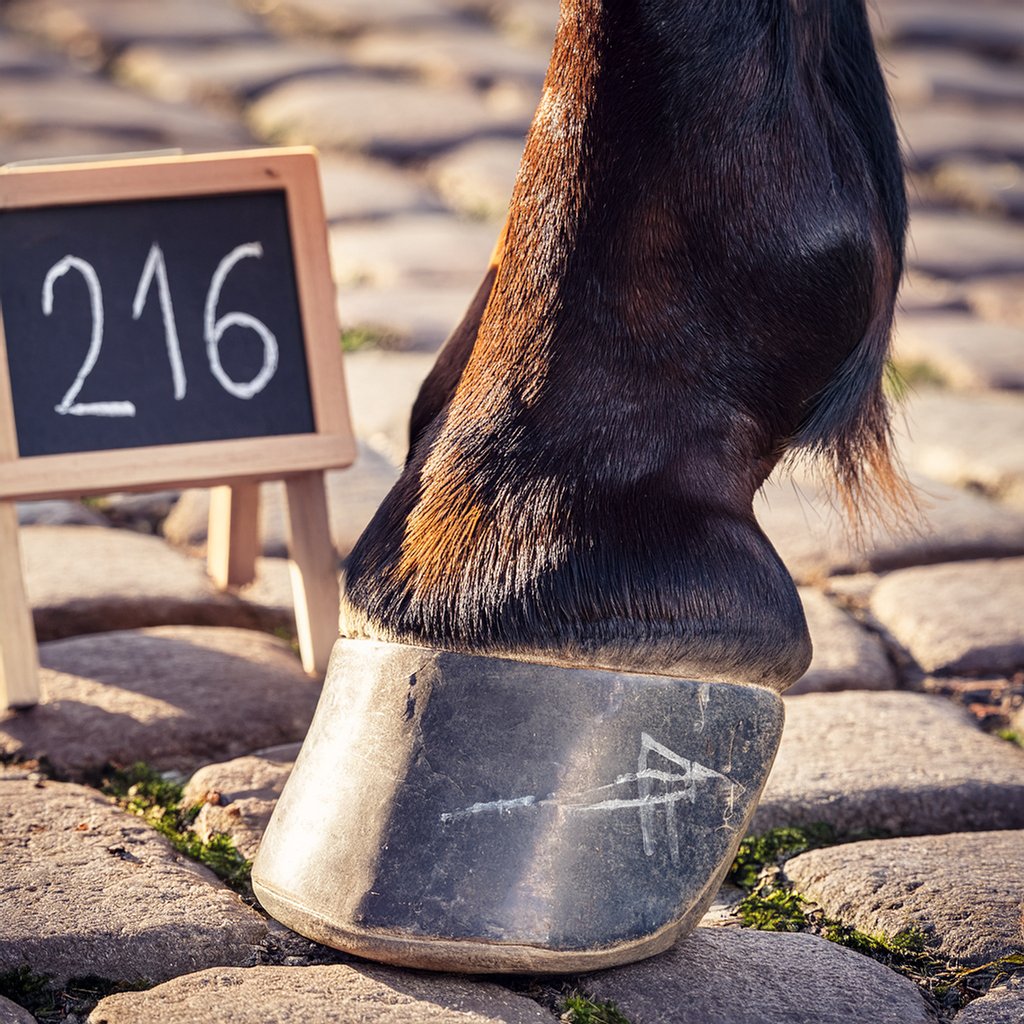
The case is solved, so the live questions are about what it does and does not prove about animal minds. Each claim has a traceable origin and a documented response. They are laid out in full so you can weigh them yourself.
The horse really understood
A minority holds that Hans genuinely grasped numbers and language, and that Pfungst explained away a real intelligence. The response: the decisive test settled it, since Hans failed whenever the questioner did not know the answer, which is impossible if he understood the questions themselves. Cue-reading fully accounts for every success without needing arithmetic, and it is the simpler explanation that fits all the results, including the failures.
The same flaw undoes ape-language claims
A stronger and still-debated argument uses Clever Hans as a warning for later research, including the chimpanzee and gorilla sign-language projects of the 1970s, where critics such as Herbert Terrace argued the apes were often responding to trainers' unconscious cues rather than composing language [1]. This is a serious and partly accepted critique that led to tighter controls. It is also contested, since some researchers hold that controlled studies still show real, if limited, animal communication, so the effect is a caution to test for, not a blanket disproof.
A real effect, overused to dismiss animal minds
A third view accepts Pfungst's finding but warns that "Clever Hans" is now sometimes thrown at any evidence of animal intelligence to wave it away. Primatologists like Frans de Waal argue that the deeper lesson cuts both ways: experimenters can fool themselves into seeing cognition that is not there, and can also design tests so poorly that they miss cognition that is [3]. The horse's real talent, reading human bodies, is itself a genuine cognitive skill worth taking seriously rather than treating as mere failure.
- [01] Terrace, H.S. (1979). Nim: A Chimpanzee Who Learned Sign Language. Knopf. On the Clever Hans problem in ape-language studies.
- [02] Sebeok, T.A. & Rosenthal, R., eds. (1981). The Clever Hans Phenomenon. On the debate over animal communication research.
- [03] de Waal, F. (2016). Are We Smart Enough to Know How Smart Animals Are? Norton. On avoiding both overclaiming and underestimating animal minds.