THE BERMUDA TRIANGLE
A stretch of the western Atlantic where ships and planes are said to vanish without trace. Insurers and the Coast Guard say its loss rate is ordinary.
,_20_May_1945.jpg)
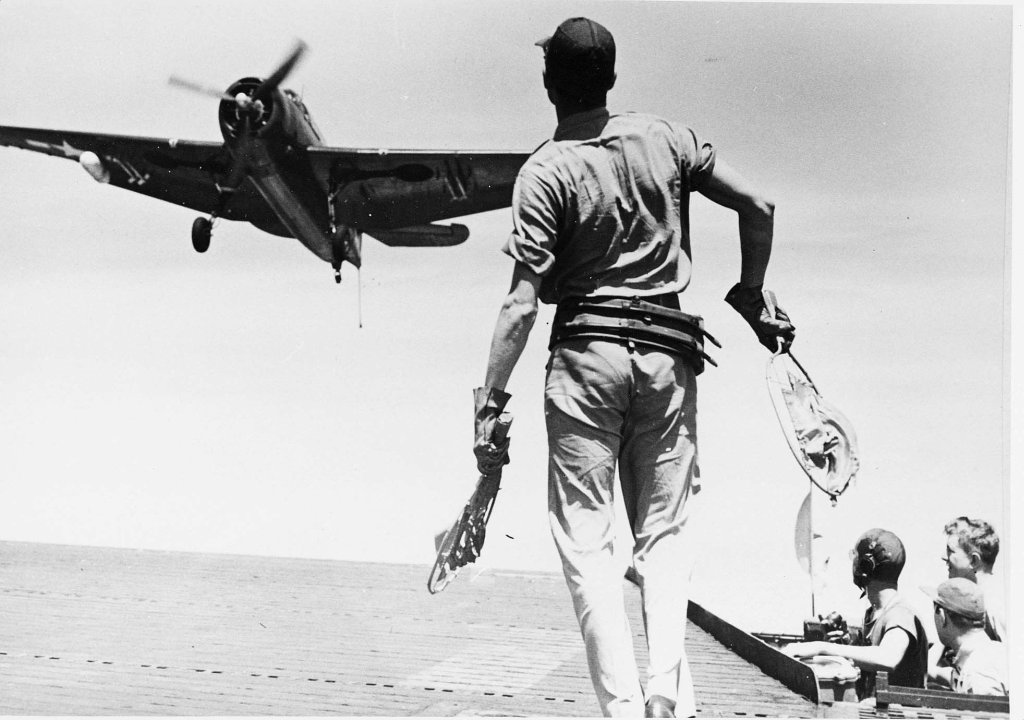
The Bermuda Triangle is a loosely drawn region of the western Atlantic, usually placed between Miami, Bermuda, and Puerto Rico, where ships and aircraft are said to disappear at an unusual rate. Popular writing gave it shape: Vincent Gaddis named the "deadly Bermuda Triangle" in a 1964 magazine article, and Charles Berlitz turned it into a 1974 bestseller. The keystone case is Flight 19, five U.S. Navy TBM Avenger torpedo bombers lost on a training flight on December 5, 1945 [4].
The mainstream position rests on two findings, the first statistical. The U.S. Coast Guard states that the number of losses in the area is in line with its heavy traffic and difficult weather, and Lloyd's of London has reported that it does not charge higher insurance for vessels crossing the region [2][3]. By the numbers, the triangle is an ordinary stretch of busy, storm-prone ocean.
The second finding is case-by-case. In 1975 the librarian Lawrence Kusche traced the original sources for the famous disappearances and found the legend largely built on error [1]. Many incidents had mundane causes such as hurricanes and navigation mistakes, some happened far outside the triangle, some ships reported "vanished without a trace" were later found, and a few cases could not be confirmed to have happened at all. Flight 19 was lost in deteriorating weather after its flight leader, who was disoriented about his position, led the planes away from land until they ran out of fuel.
What survives review is a region with real but unremarkable losses, inflated by retellings that dropped the weather, the fuel, and the human error. No agency that tracks marine and air casualties recognizes a special hazard there.
- [01] Kusche, L.D. (1975). The Bermuda Triangle Mystery: Solved. Harper & Row. The case-by-case re-investigation.
- [02] U.S. Coast Guard. Official statement that the area's loss rate is not extraordinary and no special cause is recognized.
- [03] Lloyd's of London / World Wide Fund records on shipping losses, cited by the BBC and Nova Science: no elevated insurance rate for the region.
- [04] U.S. Navy. Naval History and Heritage Command file on the loss of Flight 19, December 5, 1945.

The legend keeps a strong pull, and several explanations try to give it a mechanism. Each has a traceable origin and a documented response. They are laid out in full so you can weigh them yourself.
A genuine anomaly behind the disappearances
Charles Berlitz and earlier writers argued that the region swallows ships and planes at a rate ordinary causes cannot explain, that instruments fail there, and that wreckage often goes missing [1]. The response: Lawrence Kusche's case work showed the pattern was assembled from misreported incidents, events that occurred elsewhere, and losses in known storms, and the agencies that track casualties record no excess.
Methane gas eruptions
A physical theory holds that methane hydrate deposits on the seafloor erupt, lowering the density of the water so that ships lose buoyancy and sink, and disturbing the air above [2]. Studies of the region weigh against it. No documented sinking has been tied to a methane release, modeling suggests the buoyancy loss would be smaller and briefer than the theory needs, and there is no record of a large eruption in the area during the relevant period.
An electromagnetic or "electronic fog"
The pilot Bruce Gernon described flying through a strange fog that he said wrapped his aircraft and scrambled his instruments, and others connect the area to electromagnetic anomalies or to Edgar Cayce's claims about Atlantis [3]. These accounts rest on individual testimony without instrument data, no measured field anomaly has been found over the region, and no physical evidence supports the Atlantis version.
- [01] Berlitz, C. (1974). The Bermuda Triangle. Doubleday. The case for a genuine anomaly.
- [02] McIver, R. (1986). The methane-hydrate hypothesis, and Monatomic / USGS commentary on hydrate blowouts in the region.
- [03] Gernon, B. & Rossi, R. (2005). The Fog: A Never Before Published Theory of the Bermuda Triangle Phenomenon. The 'electronic fog' account.
INFORMAL READER POLL, NOT DATA. WHICH EXPLANATION DO YOU FIND MOST CREDIBLE?